HorrorePub
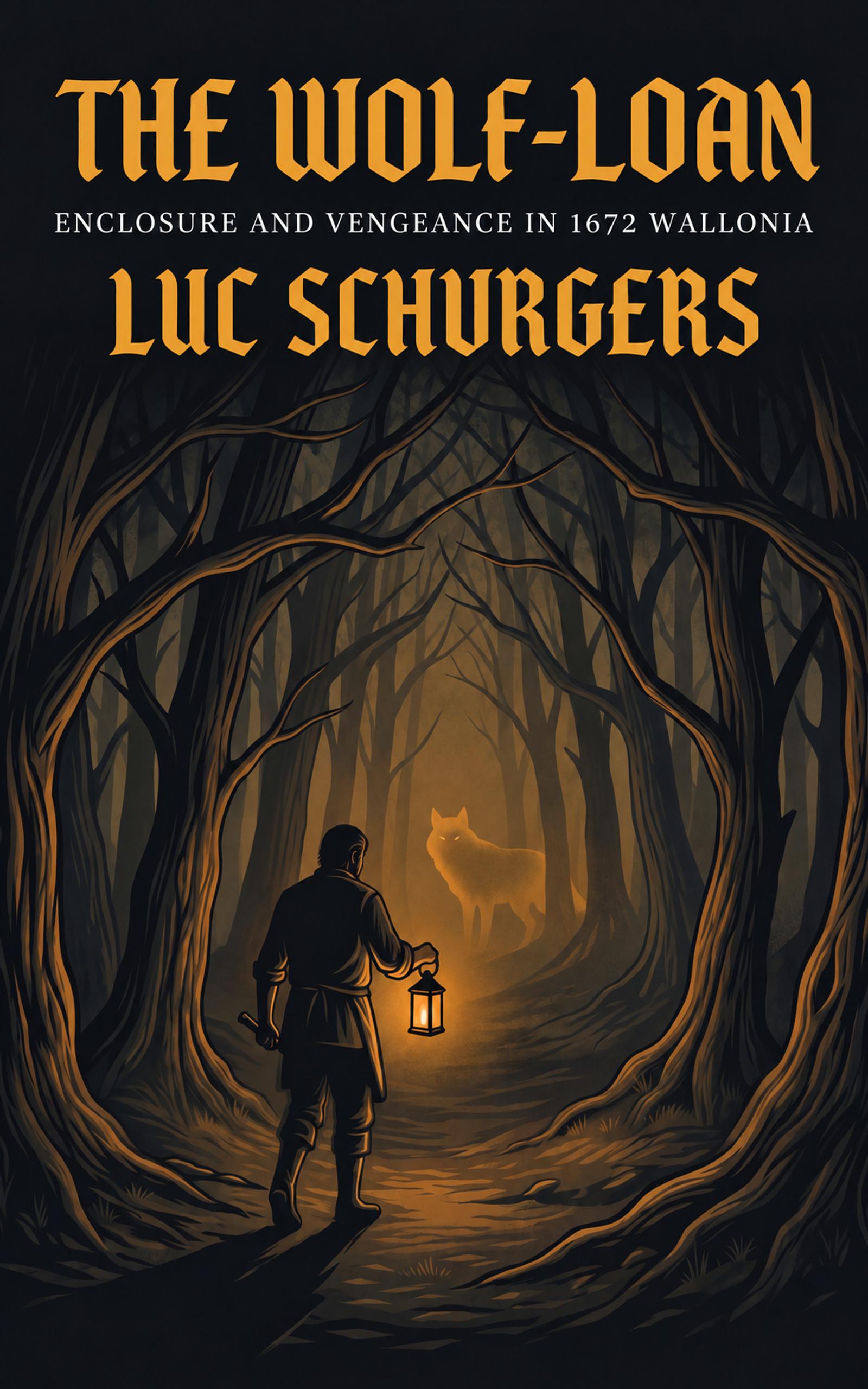
The Wolf-Loan
Enclosure and Vengeance in 1672 Wallonia

Author
Luc Schurgers
Share
About this book
In 1672, as enclosure dismantles the Wallonian commons, the blacksmith Henri Grandmont accepts a gift from an old woman in the Ardennes: a wolf-self, with which to reclaim what the law has taken. Framed by his own trial testimony, Luc Schurgers's novel is a quiet, exacting horror about consent, conscience, and the body that acts without permission.
Summer, 1672. In the Wallonian commons outside Verviers, surveyors drive their stakes into ground that has been held in common for centuries. The law is on their side. Henri Grandmont, a blacksmith with strong hands and a steady trade, watches the fences rise and understands, before anyone tells him, that the door is closing.
When the guild's lawyer confirms there is no legal recourse, Henri walks to the edge of the Ardennes. An old woman waits among the trees. She offers him a gift she calls a wolf-self, and asks only that he understand the cost cannot be measured beforehand. He accepts. The first run through the forest is the most alive he has ever felt.
The fences come down. The village wakes to a small, quiet victory. Henri wakes too — and begins, gradually, to notice the discrepancies. A neighbour's loss he cannot account for. Hours he cannot place. Hands that remember what his face does not.
Framed by the testimony Henri gives at his own trial, Luc Schurgers's novel is a study of conscience under transformation: of a body acting in a man's name, by his values, beyond his consent. It asks what we owe for what we did not choose to do, and whether the self can be held responsible for the shape it took to survive.
“The most disturbing thing about this novel is how plausible it all feels. Real horror doesn't need monsters.”
— Sofia Andersson, author of Briar Rose★★★☆☆