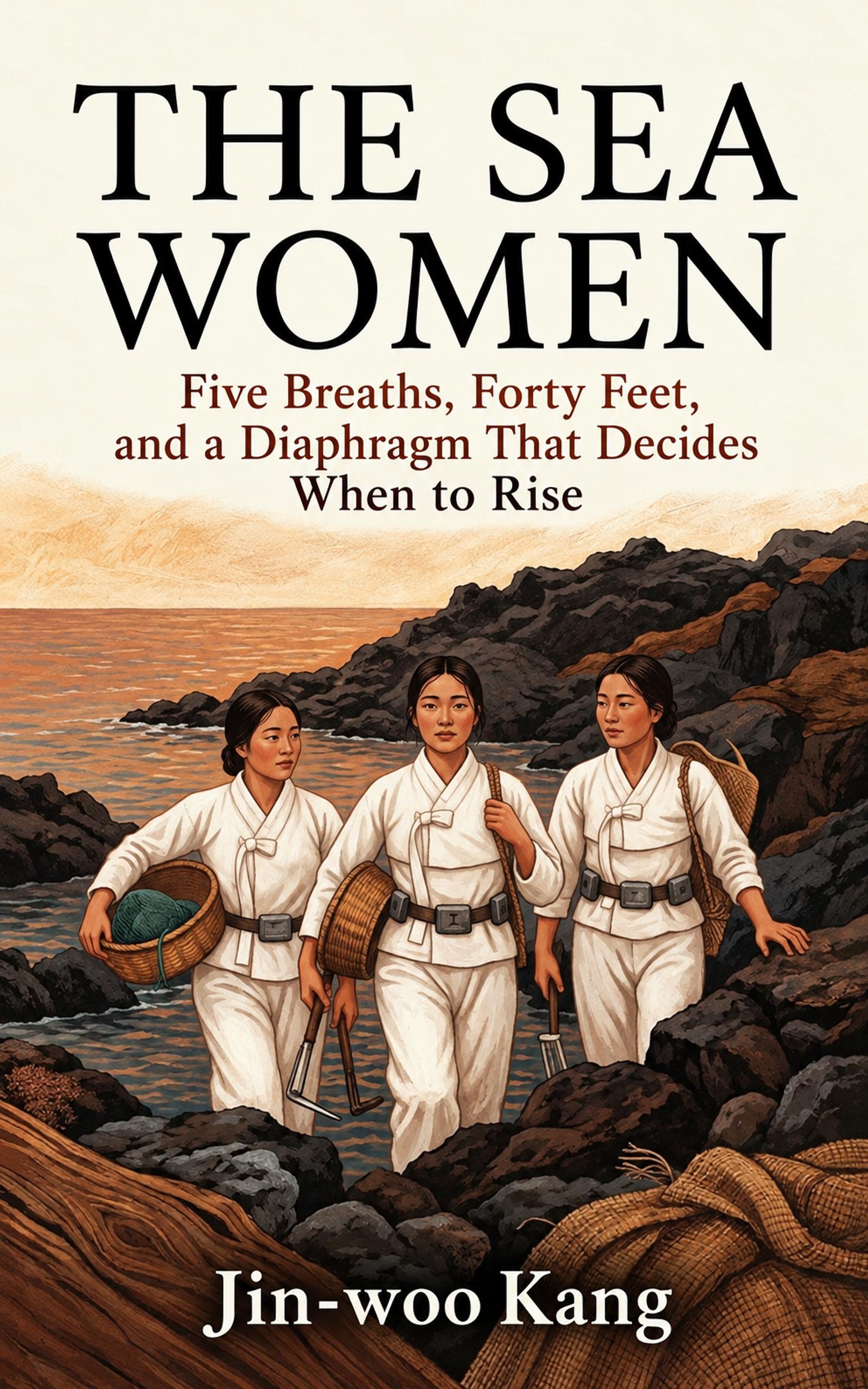
The Sea Women
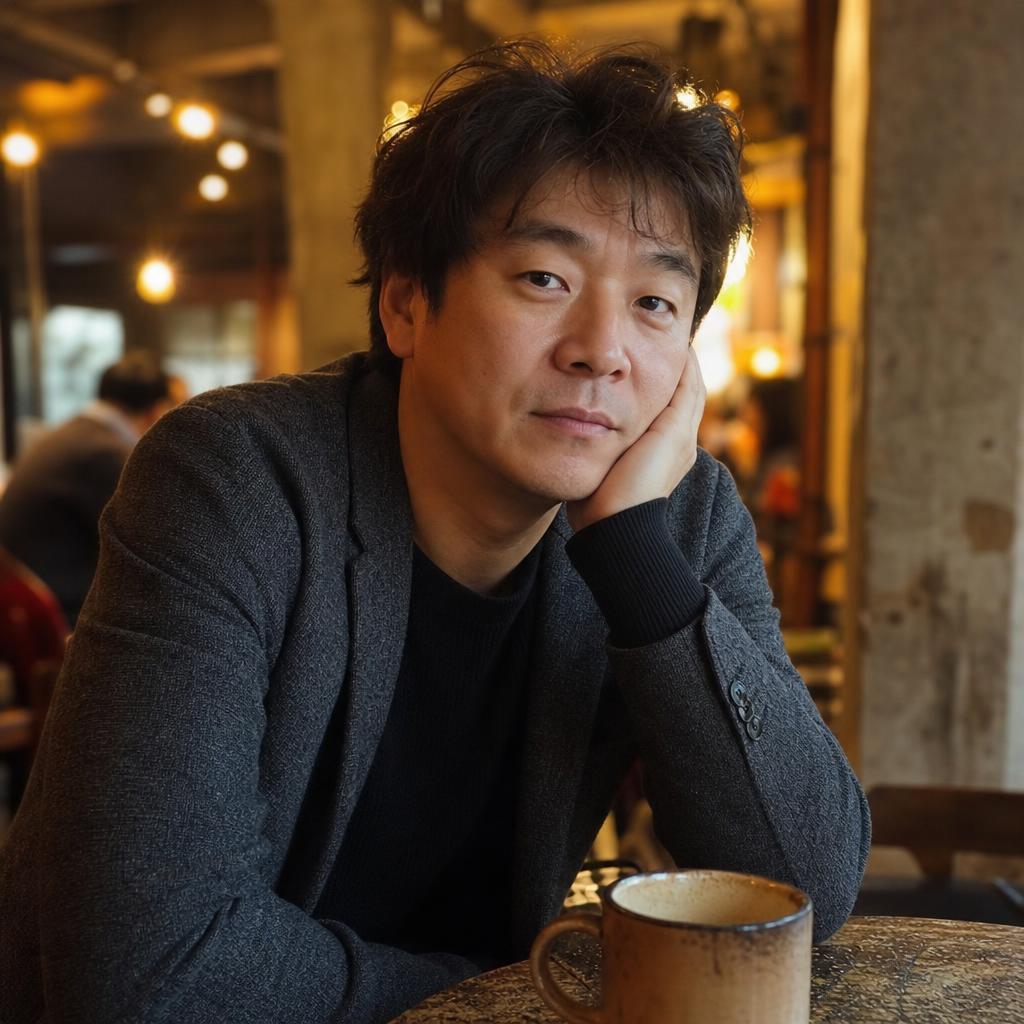
Author
Jin-woo Kang
Share
About this book
Jeju Island, 1932. Three haenyeo — free-divers who harvest the seabed on a single breath — discover that the colonial cooperative has been falsifying its ledgers, and begin organizing the women of the eastern villages against the Japanese administration and its Korean intermediaries. A novel of labor, language, and the volcanic coast that shaped them.
Before dawn on Jeju, a woman walks into eleven-degree water carrying a gourd buoy and a curved iron hoe. She fills her lungs five times, descends forty feet, and pries abalone from black volcanic rock until her diaphragm convulses. When she breaks the surface, she releases the sumbisori — that sharp, two-note whistle the haenyeo use to tell each other they are still alive.
It is 1932, and the women of Gujwa-eup have always lived by what they can hold in a single breath. Their husbands tend the thin volcanic soil; their wages feed the island. But the Japanese trawlers are scraping the eastern channels bare, and the cooperative ledger — written in a script the divers cannot read — pays them less than half what their catch fetches in Jeju City.
Kim Ok-nyeon learns to read the numbers. Bu Deok-nyang keeps the tally. Bu Chun-hwa, broad-shouldered and unsentimental, watches the kelp forests retreat into deeper water. Around a driftwood fire in the bulteok, three women begin to count what has been taken from them, and to imagine what it would mean to take it back.
Jin-woo Kang's novel reconstructs the largest female-led uprising in Korean history through the bodies that carried it — scarred hands, ruptured eardrums, lungs trained against the fundamental imperative of the nervous system. It is a book about labor, water, and the silence that closes over those who do not surface.
“Period detail that never overwhelms the human drama at its center. Historical fiction at its best.”
— Anya Volkov, author of The Wild Swans★★★★★