Literary FictionePub
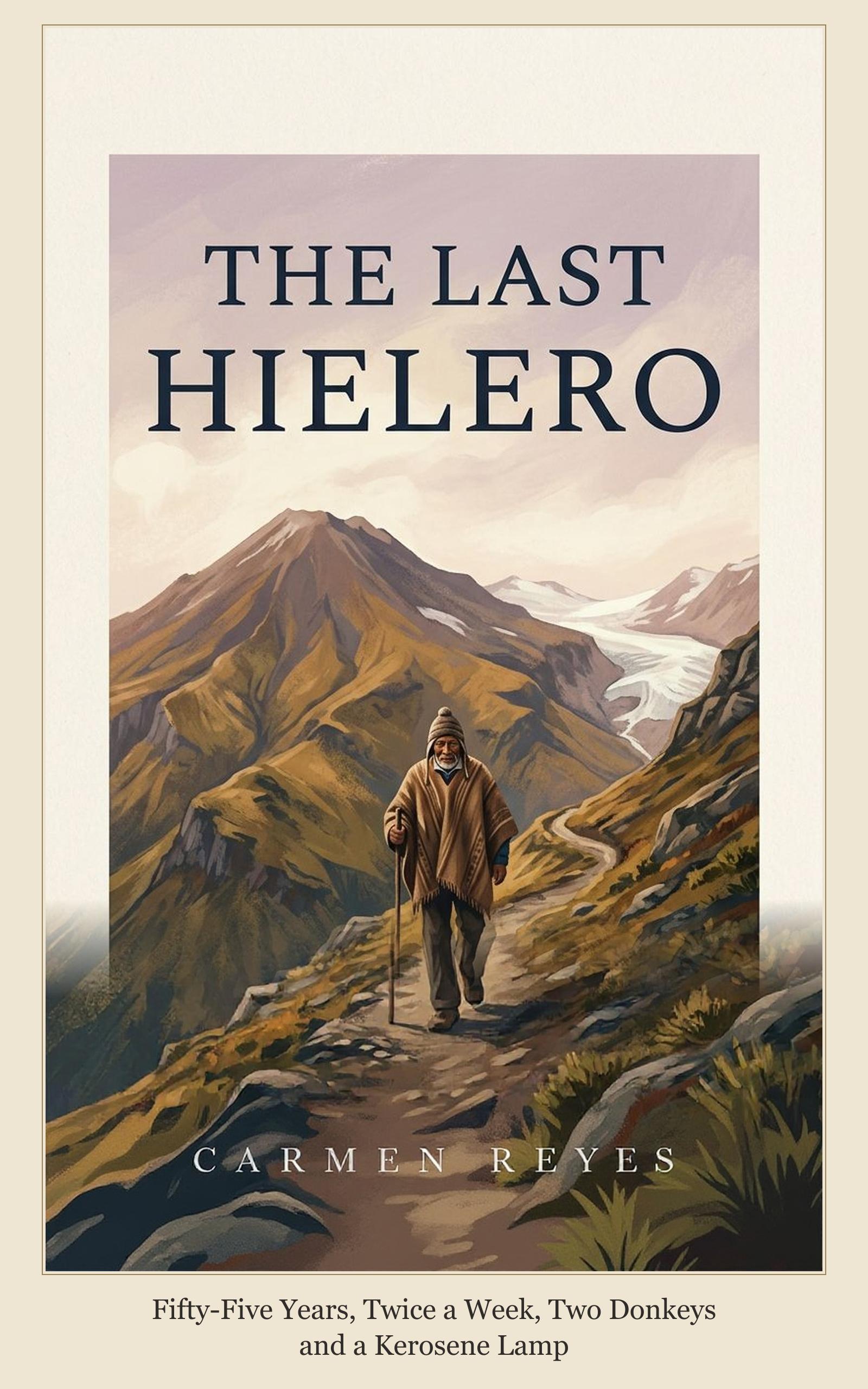
The Last Hielero

Author
Carmen Reyes
Share
About this book
On the highest volcano in Ecuador, the last ice harvester climbs twice a week to a vanishing glacier while his granddaughter, a young environmental scientist, arrives to measure its retreat. Across one season on Chimborazo, Thandiwe Moyo's quiet drama considers inheritance, colonial labor remade as devotion, and the rituals we keep when the conditions that produced them are gone.
At two-fifteen in the morning, by the light of a kerosene lamp, Crisanto Pumaquero dresses in the layers his wife wove for him and loads two donkeys for the climb he has made twice a week for fifty-five years. He is seventy-two. He is the last of the hieleros — the ice harvesters of Volcán Chimborazo — and the glacier he has known since boyhood is retreating up the mountain a little further each season.
When his granddaughter Isabela arrives from Quito with cases of monitoring equipment and a German NGO grant, the old man and the young scientist begin to climb together: he to cut blocks of five-hundred-year-old ice with his father's axe, she to drive GPS stakes into what remains. Between them lies a tradition born of colonial forced labor and transfigured, over centuries, into devotion — a inheritance she has studied in seminars and he has carried in his hands.
In the market in Riobamba, a young man sells factory ice from a generator-powered freezer for fifty cents a bag. In Cayambe, Crisanto's son tends roses and does not call. On the páramo, the wind keeps its own counsel.
Reyes's novel asks what it means to practice a vocation that the world has already decided to forget — and what is owed, in the meantime, to the work of the hands.
“High on Chimborazo the air thins and so does the ice, until each climb feels like devotion performed for a vanishing god. Melancholy this clear reads almost like altitude.”
— Oliver Marsh, author of Echoes Deep★★★★★