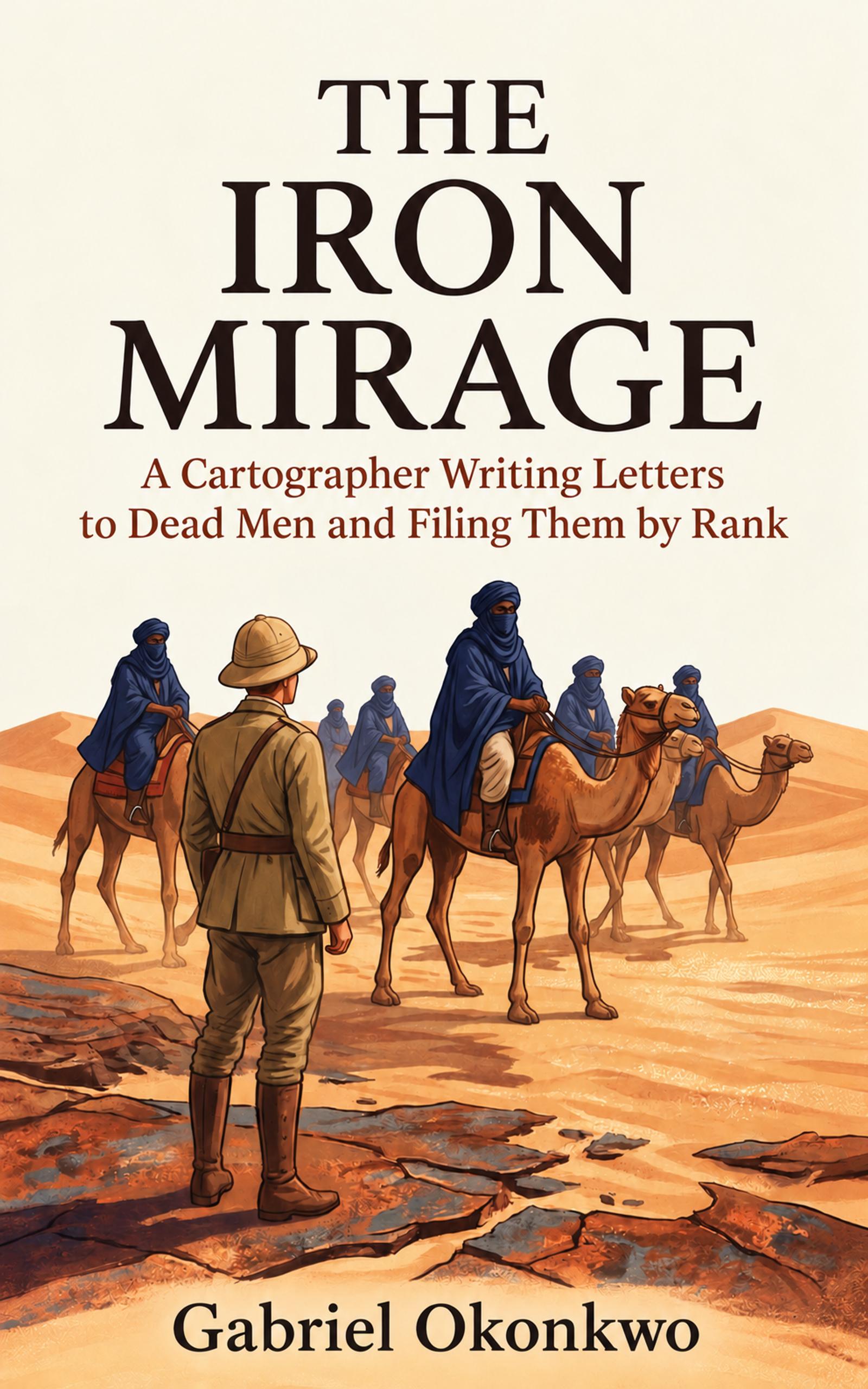
Literary FictionePub
The Iron Mirage
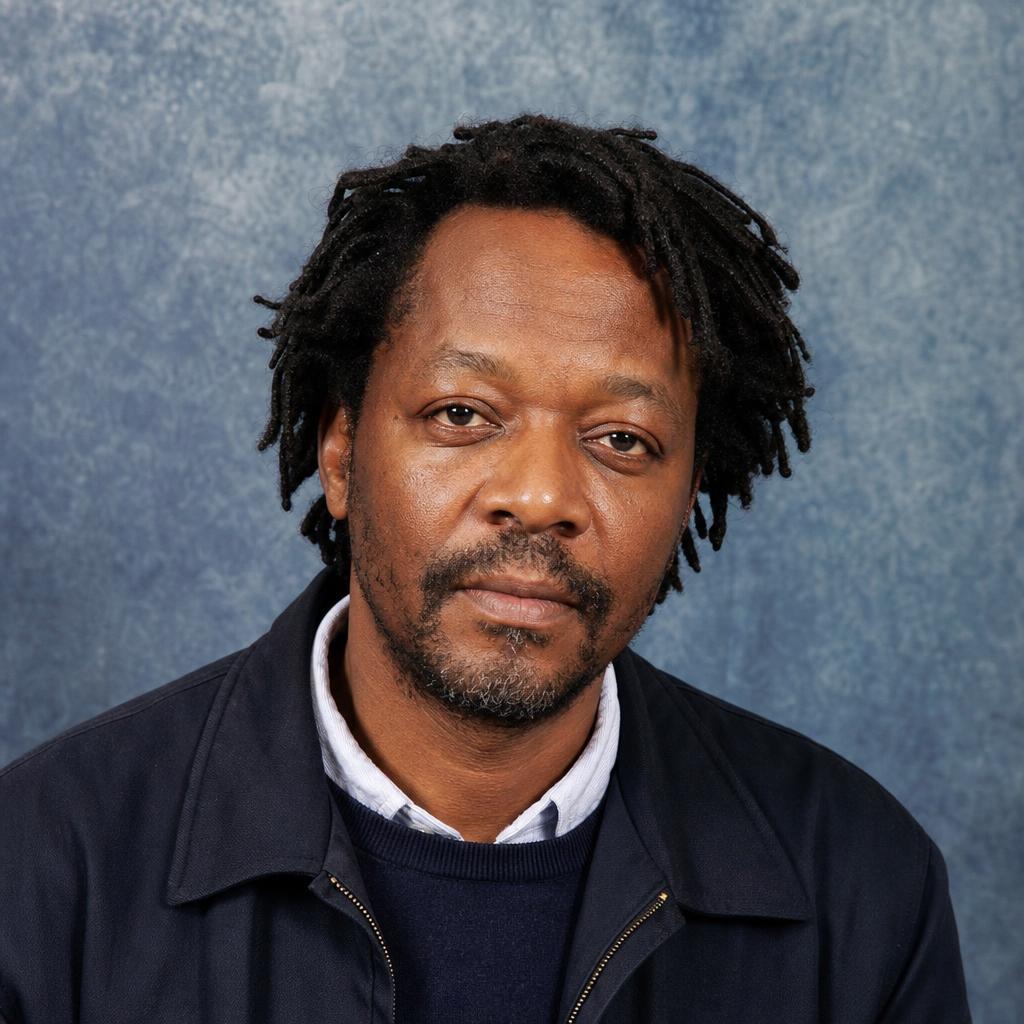
Author
Gabriel Okonkwo
Share
About this book
Gabriel Okonkwo's historical novel follows Henri Duveyrier, the young French explorer whose romantic portrait of the Saharan Tuareg as desert knights helped justify a colonial railway survey across the Ahaggar. Moving between 1860 and the aftermath of the 1881 Flatters expedition, the book examines idealism, cartography, and the long private cost of words that travel further than the man who wrote them.
Paris, 1891. In a fifth-floor apartment that smells of old paper and cold tea, a fifty-one-year-old cartographer writes letters to dead men. Henri Duveyrier seals each one with wax and files it in a drawer with the others — addressed to a sergeant, a colonel, a guide, all killed twenty years ago in a desert he loved more than he loved his own country.
Thirty years earlier, at twenty, he had ridden into the Ahaggar and found among the Tuareg a people he could not stop describing as knights. The word — *chevaliers* — travelled. From his journal to his book, from his book to the Société de Géographie, and finally into the Chamber of Deputies, where engineers proposing a trans-Saharan railway needed exactly what he had given them: a noble people, a crossable land.
In 1880, Colonel Flatters led ninety-seven men south from Ouargla to survey a route. They carried Duveyrier's maps and Duveyrier's sentences. What waited for them at the well of Bir el-Garama was a country Duveyrier had described faithfully and understood not at all.
Gabriel Okonkwo's novel moves between the cartographer's room and the desert that emptied it, asking what a man owes to the dead when the instrument of their killing was his own affection — and whether a love built on a misreading is still love, or only a more elegant form of conquest.
“A devastating portrait of human fragility that never flinches from emotional truth. The prose cuts deep without ever feeling cruel.”
— Kwame Asante, author of Sundiata★★★★☆