Literary FictionePub
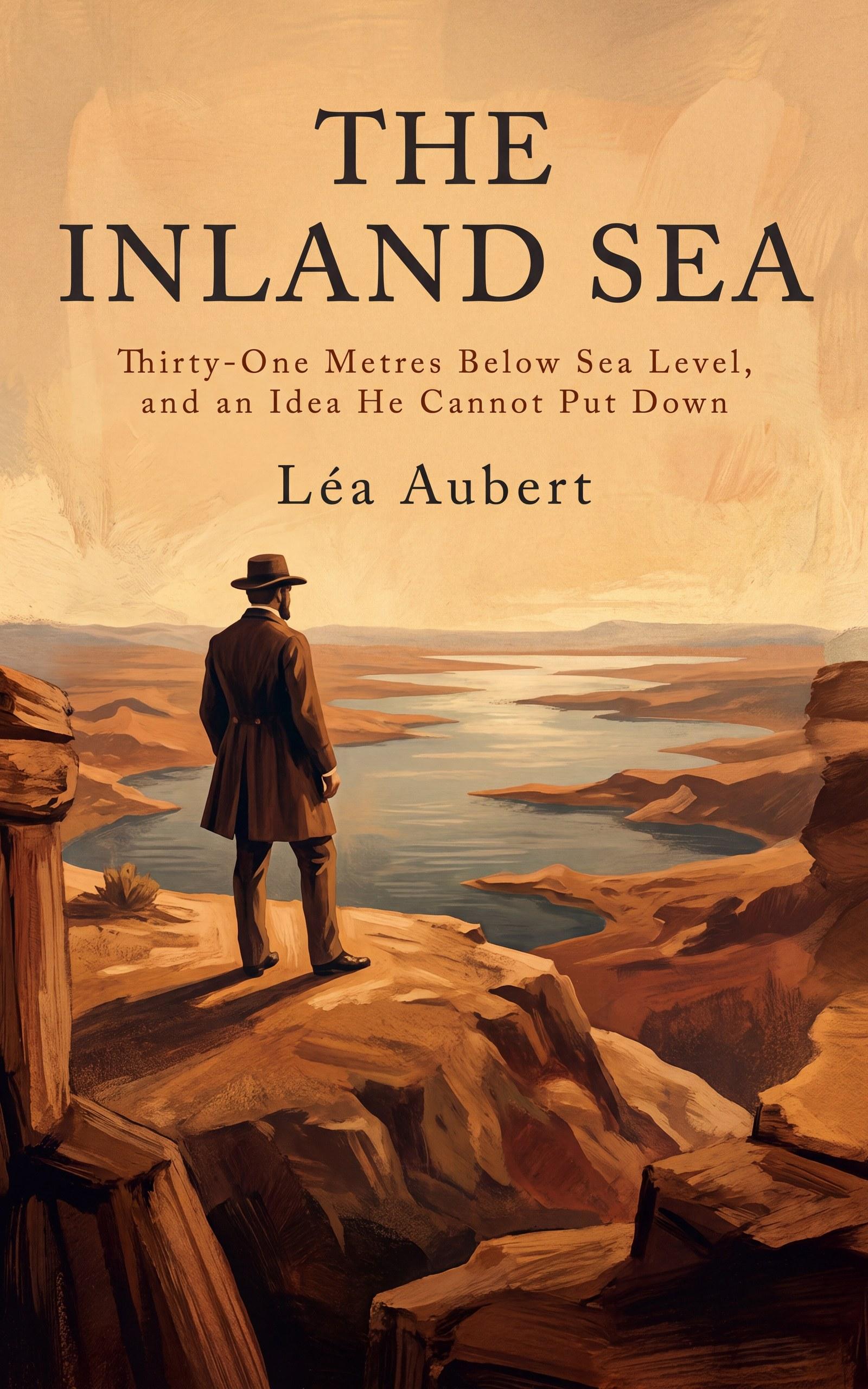
The Inland Sea

Author
Léa Aubert
Share
About this book
Léa Aubert's novel follows François Élie Roudaire, a French military geographer who in 1874 proposed flooding the Algerian Sahara to recreate an ancient inland sea, and who enlisted Ferdinand de Lesseps, the architect of Suez, to help him. A study of measurement, marriage, empire, and the long arithmetic of a single misread number.
Before sunrise on a salt flat in eastern Algeria, a young French officer presses his eye to a theodolite and reads a number that will not let him go: thirty-one meters below sea level. The Sahara, he realizes, is not a mountain to be conquered but a basin waiting to be refilled. Sixty million years ago the Tethys Sea covered this ground. The water left. The salt remained.
François Élie Roudaire is a topographer, the kind of man whose talent his commanding officer calls the most boring and the most useful in the army. From a quiet life in Guéret with his wife Marguerite, he begins to write letters, then articles, then a proposal: cut a sixty-kilometer channel from the Gulf of Gabès, and let gravity make a new Mediterranean in the heart of North Africa. Ferdinand de Lesseps, the man who built Suez, reads the proposal and invites him to lunch.
What follows is a decade of measurement, persuasion, and slow ruin. There is Slimane ben Aissa, the Chaamba guide who calls the salt flats the earth's exposed skin. There is Marguerite, who asks the question no one in Paris asks: what about the people who live there now.
The desert, in the end, answers in its own language.
“Raw, unflinching, and deeply human. This is drama stripped to its bones and all the more powerful for it.”
— Greenlight Editorial★★★★☆