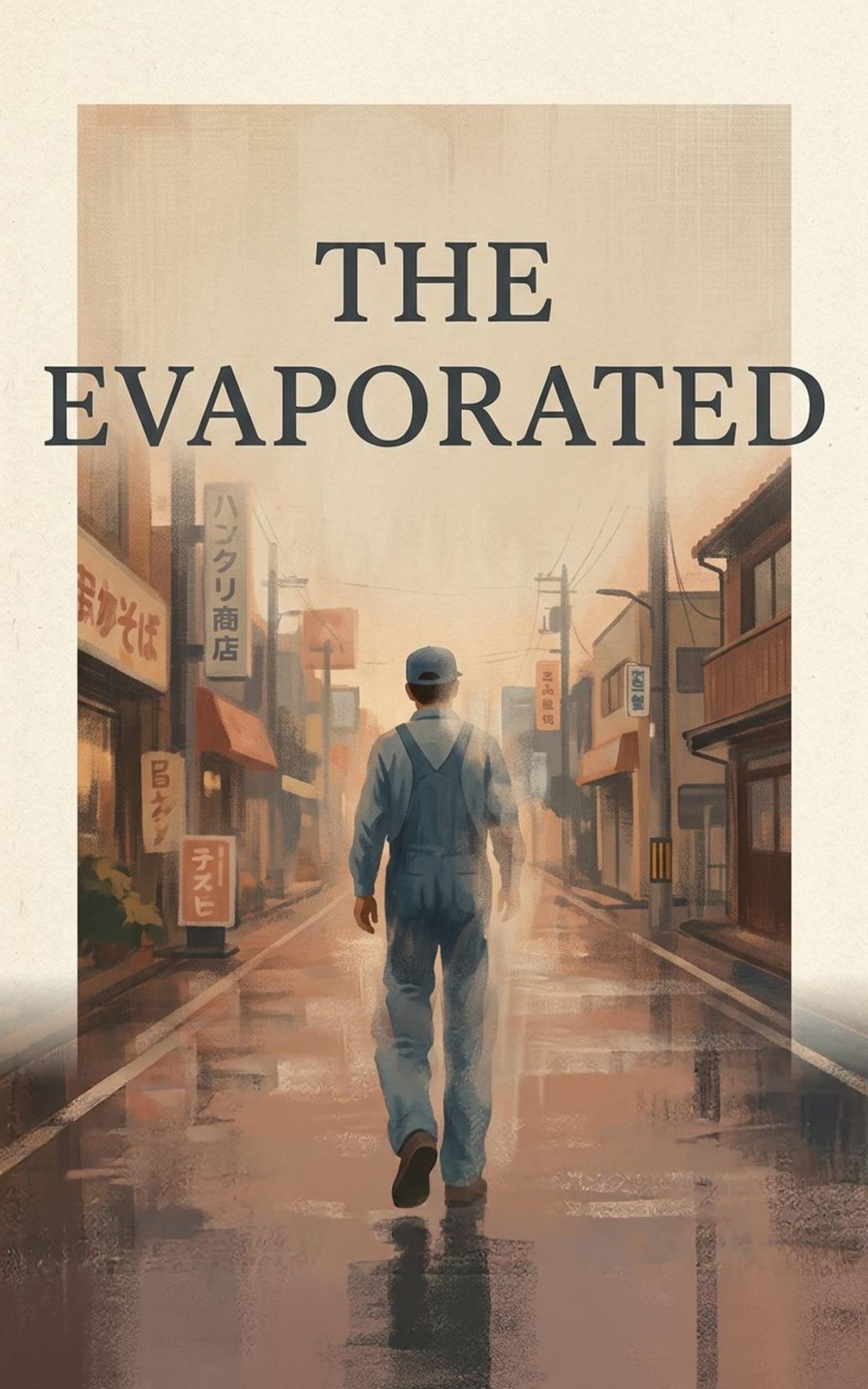
The Evaporated

Author
Miriam Sato
Share
About this book
A medical translator in São Paulo's Japantown travels to Hamamatsu in search of the father who vanished there during the 2008 financial crisis, retracing his years on a Japanese factory floor through the letters he stopped sending. Miriam Sato's debut moves between Portuguese, Japanese, and the silence in which immigrant lives are quietly erased.
In the red-torii light of São Paulo's Liberdade district, Marina Furukawa makes her living finding the right word for someone else's pain. As a hospital translator, she crosses between Portuguese, Japanese, and the wordless dialect of bodies that have run out of language — a precision she has cultivated, perhaps, because the central absence of her own life has never been named.
Fifteen years ago, her father Tadashi went to Hamamatsu as a *dekasegi* factory worker and, in the wreckage of the 2008 financial crisis, simply stopped writing back. Now Marina's grandmother is dying, and she has left behind a bundle of aerogrammes — five years of blue ink thinning toward silence. *Find your father*, the old woman says. *Not for me. For you.*
Marina travels to Hamamatsu, a Japanese city still haunted by the Brazilian community that once filled its assembly lines and its restaurants. She walks the factory floor where Tadashi stood for eight hours a day. She stands in the dormitory room that has been wallpapered over. She finds, in a small restaurant called Saudade, a woman who remembers the quietest man she ever served.
What Marina is looking for cannot quite be called a person anymore. It is the shape a person leaves when they have begun, slowly, to evaporate — and the question of whether such a shape can ever be returned to.
“Moves between three languages and lets the untranslated remainder do the emotional work; a search structured around letters that stop, where the silences are edited as carefully as the sentences.”
— Liwayway Sanchez, author of The Girl From the Garage★★★☆☆