Literary FictionePub
The Drowning Field

Author
Liam Tóibín
Share
About this book
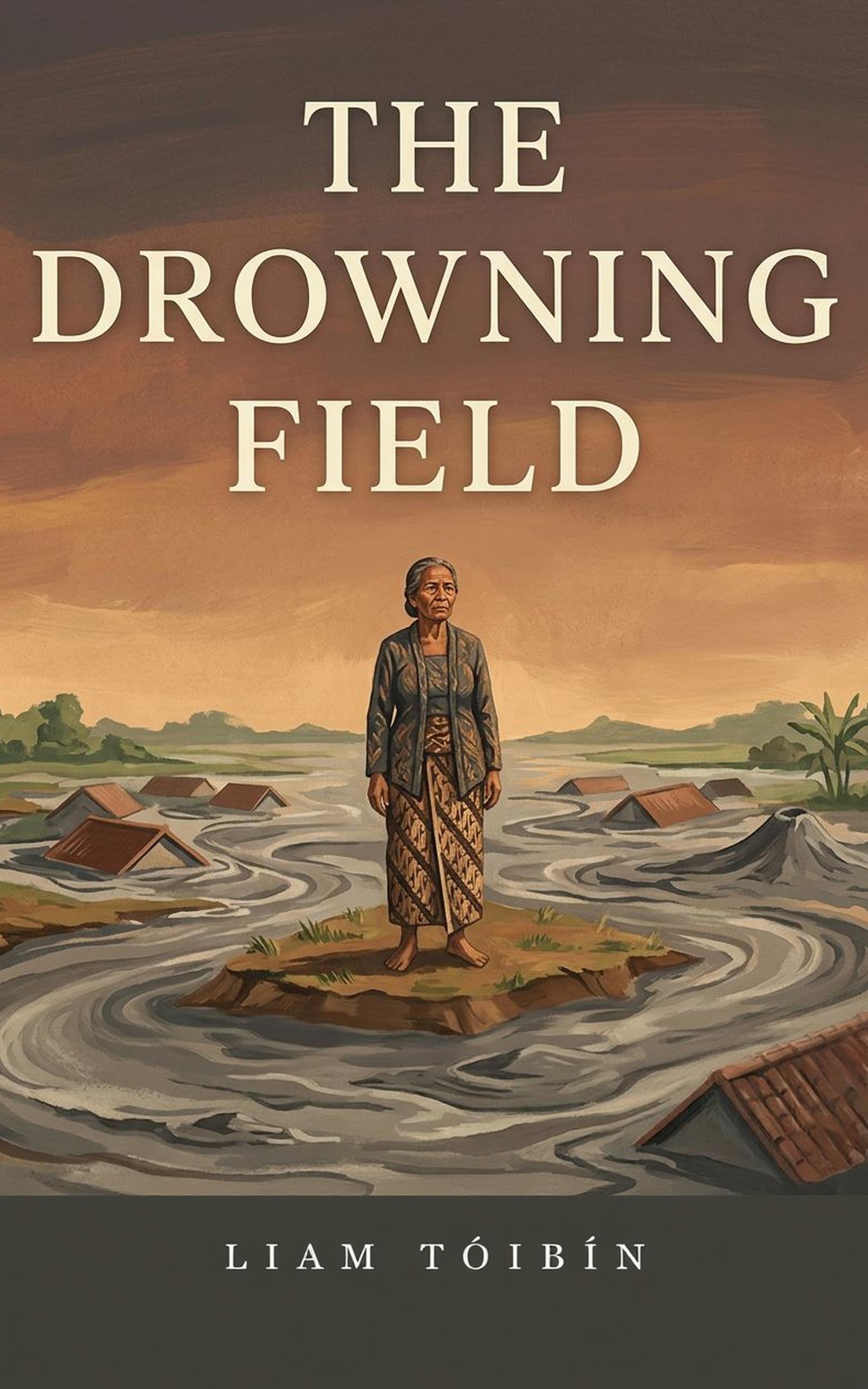
From Liam Tóibín, a novel set against the 2006 Sidoarjo mud disaster in East Java. When a corporate drilling operation triggers a mud volcano that buries her village, rice farmer Siti Rahmawati is drawn into a years-long campaign against the conglomerate responsible — even as her elderly father-in-law refuses to abandon the sinking house he built half a century ago.
At dawn in Renokenongo, Siti Rahmawati pushes rice seedlings into the wet earth of an East Java paddy, her hands moving with the certainty of a woman who has worked this ground since girlhood. One kilometer south, a drilling rig owned by a politically connected corporation is boring into geology no one fully understands.
On May 29, 2006, the earth begins to exhale. Hot grey mud rises through a farmer's rice shoots and does not stop. It advances at walking pace — patient, sulfurous, indifferent — swallowing fields, then roads, then houses. Within weeks, Siti's village is gone. In a fluorescent-lit warehouse outside Porong, hundreds of families wait on forms that promise compensation in a tense that is not quite future and not quite fiction.
What begins as a domestic catastrophe widens into a three-year reckoning. Siti learns the architecture of impunity: shell companies, cabinet ministers, the regulator and the regulated breathing through the same lungs. She marches. She is photographed. Her husband, a farmer without land, signs what she will not sign.
And next door — above his drowned ground floor — her father-in-law Pak Harto carries buckets of soil up the stairs and plants tomatoes on the balcony, refusing to leave the house he built in 1968. Liam Tóibín's novel asks what a person owes the fight, and what a person owes the one stubborn life that fits inside her arms.
“Raw, unflinching, and deeply human. This is drama stripped to its bones and all the more powerful for it.”
— Clara Beaumont, author of Allerleirauh★★★★★