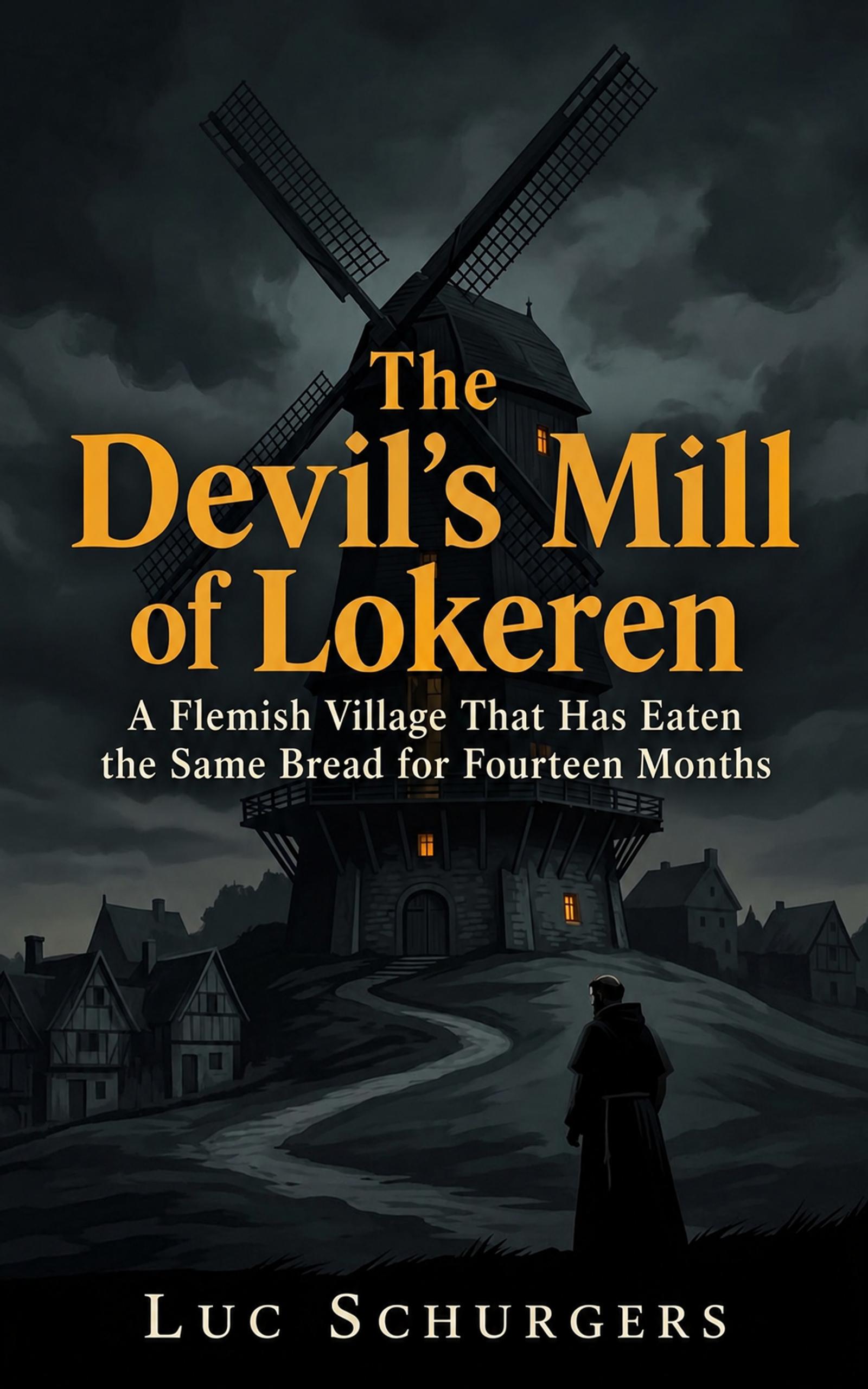
The Devil's Mill of Lokeren

Author
Luc Schurgers
Share
About this book
In a Flemish village in 1745, a young priest arrives to find a community of unusual prosperity, gentle manners, and a windmill that has not ceased turning for over a year. As Father Johannes settles into the rhythm of Lokeren, he begins to understand that its abundance is the visible face of an older arrangement, and that the cost of bread is not paid in coin.
The air in Lokeren carries the scent of fresh-baked bread, a rich, yeasty aroma that promises warmth and sustenance. To Father Johannes, newly arrived in the thriving Flemish village in the autumn of 1745, it seems a perfect idyll: industrious, well-fed, bathed in a light that recalls the masters of the Dutch Golden Age. The market square spreads before him like a Jordaens canvas, and the bread on every stall is more beautiful than any he has tasted.
Yet beneath this picturesque prosperity, a subtle disquiet stirs. The villagers are content, unnervingly so. Their faces hold a peace that borders on placidity, their joys mechanical, their reactions arriving a fraction of a second too late. For fourteen months, the people of Lokeren have eaten only the flour ground at the mill above the village, where the stones have not stopped turning, and where the miller Van Damme mops a thin crimson moisture from the grinding gap each morning before the village wakes.
Only Anneke, dismissed as mad, will speak of what was signed and what is being paid. In her walled garden, where the late roses burn fractionally brighter than anywhere else in the parish, she waits for a priest who might finally listen.
What does a community become when its prosperity is sustained by a covenant nobody remembers agreeing to — and what does it cost the man who decides to read the contract?
“The land itself becomes the antagonist in this chilling folk horror that feels ancient and uncomfortably present.”
— Sebastian Moreau, author of The Pied Piper★★★☆☆