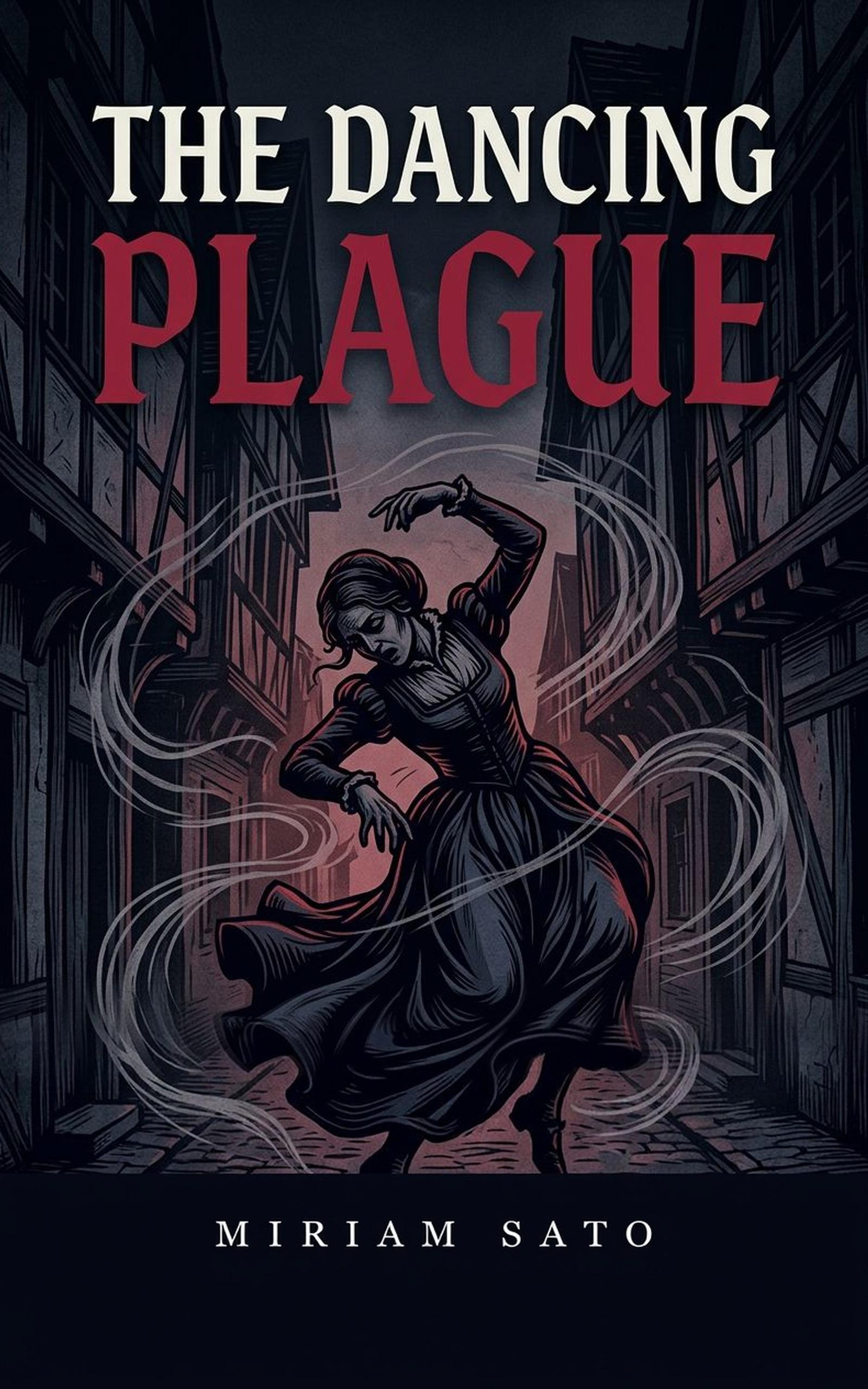
The Dancing Plague

Author
Miriam Sato
Share
About this book
In the famine summer of 1518, a tanner's wife in Strasbourg is overtaken by a rhythm she cannot stop, and within days her affliction has spread through the quarter. Miriam Sato reconstructs a documented epidemic from inside the dancers' bodies and the council chambers above them, tracing how a city's medicine, faith, and law arrived together at a lethal cure.
Dawn in Strasbourg, July 1518. Frau Troffea steps from her doorway into a narrow street, and her feet begin to move. There is no music. There is no joy. There is only a three-beat rhythm rising from somewhere beneath thought, and a husband watching from the cobblestones as his wife dances past his outstretched hands.
Within a week, thirty are dancing. Within a month, the affliction has crossed the quarter, drawing tanners and washerwomen and orphan apprentices into its frequency. The bodies fail in sequence — feet, then ankles, then hearts — but the rhythm does not relent. Margrit Troffea remains lucid inside her involuntary limbs, a woman watching herself be moved.
In the guild halls and the cathedral, Strasbourg's institutions assemble their answers. The physicians invoke the humours. Father Ehrhart names the sin. The magistrates commission a wooden stage and hire pipers, certain that the cure for compulsive dancing is more dancing. Only a young itinerant called Paracelsus, refused entry to the chamber, watches the dancers themselves.
Miriam Sato writes the body as a text the period cannot read. Drawing from the documented epidemic of 1518, she renders a city where every functioning institution — medicine, church, guild — converges on the wrong cure, and asks what it costs to be governed by people who will not look.
“A slow-burn nightmare that gets under your skin and stays there. Not for the faint of heart.”
— Clara Beaumont, author of Allerleirauh★★★★☆