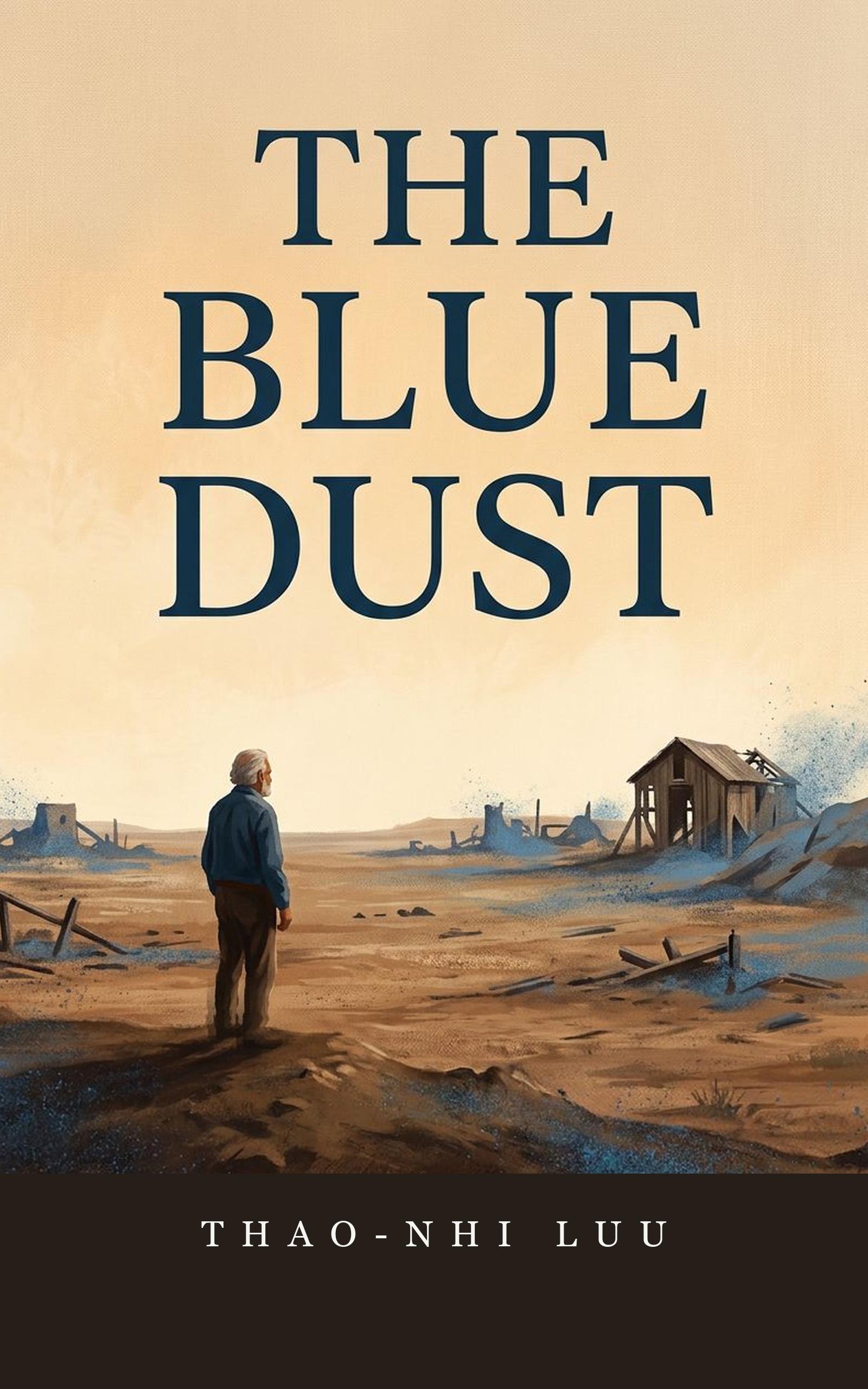
The Blue Dust

Author
Thao-Nhi Luu
Share
About this book
On a remediation assignment to a de-gazetted asbestos-mining town in the Pilbara, a young government surveyor meets the seventy-eight-year-old woman who refuses to leave it. As demolition approaches, the town's buried history — and his own connection to it — begins to surface. A debut novel about land, complicity, and the dignity of staying.
The road into Karrinjarra is unmarked. The town has been struck from every map, its power cut, its mail discontinued, its name retired by the state — and yet at the end of a dirt track descending into a red gorge in the Pilbara, a clothesline still holds drying sheets, and a ginger cat watches the arrival of the first visitor in months.
Finn Darvill has come to oversee the demolition. His brief is administrative: survey the ruins, coordinate the contractors, facilitate the relocation of one Lorraine Ketch, age seventy-eight, the last resident of a former blue-asbestos mining town that the courts have at last condemned. Lorrie has thirty days. She makes up the spare room and pours the tea.
As Finn moves through the contaminated streets in his respirator, the past presses in: 1962, a young couple stepping off a bus into a town alive with paper lanterns and accordion music, with a doctor's report quietly filed away in a drawer, with crocidolite dust hanging luminous in the lamplight above the dancers. The mineral that built the town is the mineral that is killing its last citizen — and which, in ways Finn has not yet admitted to himself, has shaped his own life too.
Thao-Nhi Luu's novel is a patient, geological study of refusal: of a woman who has chosen the gorge over the mercy of strangers, and of the country that taught her how.
“A condemned asbestos town, a woman who refuses to leave it, a surveyor who probably shouldn't stay. The dust settles into every sentence of this stubborn, humane debut.”
— Tomás Herrera, author of The Claw★★★☆☆