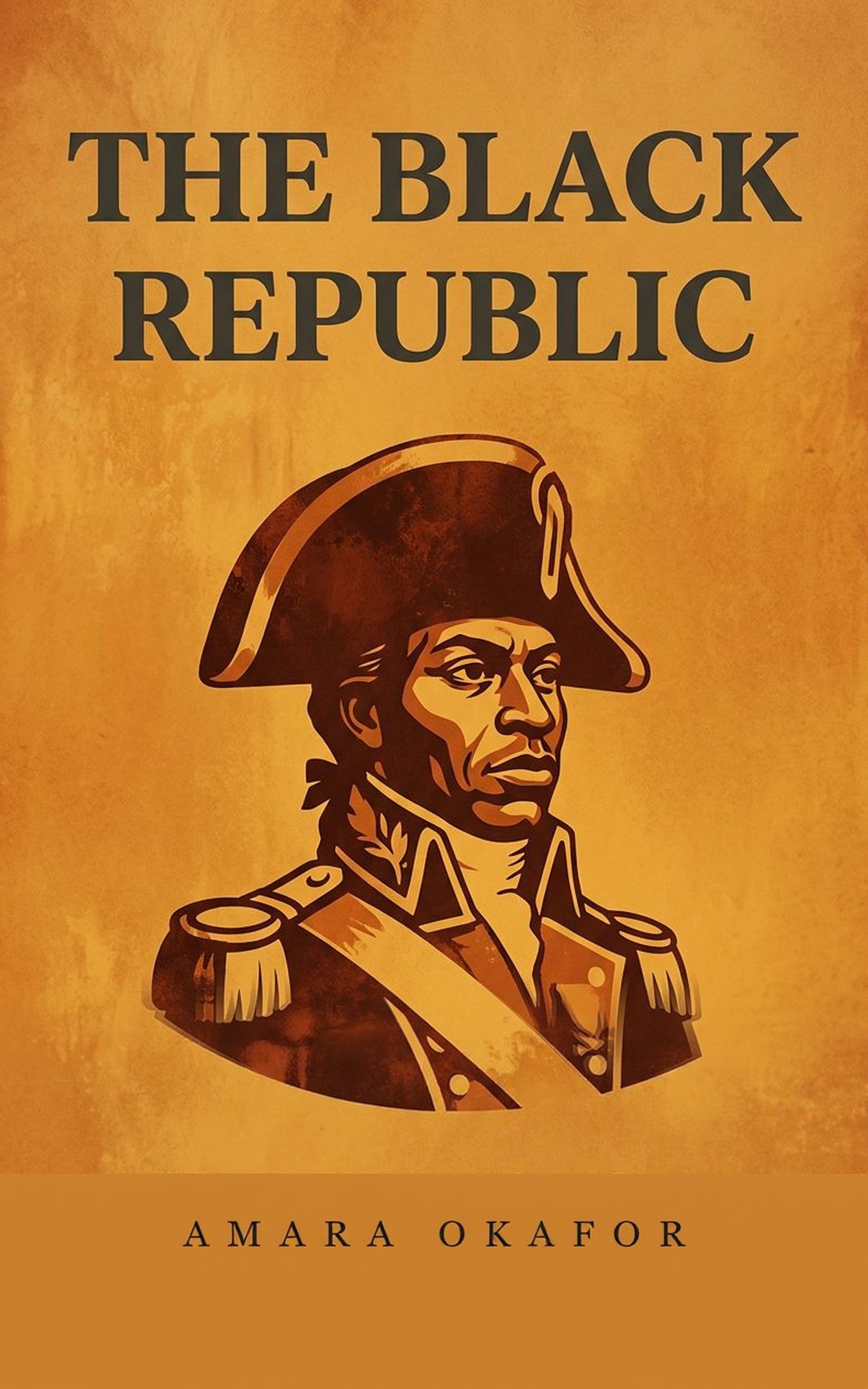
The Black Republic
Toussaint Louverture and the Haitian Revolution

Author
Amara Okafor
Share
About this book
An epic novel of the Haitian Revolution, following Toussaint Louverture from his quiet study of Caesar on a Saint-Domingue plantation through the uprising at Bois Caïman, the wars against Spain, Britain, and France, and the founding of the first Black republic. Okafor traces a strategist, a marriage, and a generation of officers across thirteen years of fire.
Cap-Français, 1791. The wealthiest colony in the Western Hemisphere glitters above the cane fields, where half a million enslaved people cut sugar under the whip and the boiling vats. The drums of Bois Caïman are about to carry a single rhythm from plantation to plantation, and a fire will rise that no European army has yet learned to read.
Toussaint Louverture is forty-eight, technically free, manager of his former master's estate. At night he reads Caesar and Raynal by candlelight, drawing maps no one has asked him to draw. When the fields ignite, he leaves the great house standing and rides into the mountains to find a courageous, leaderless army — and to begin the slow, patient work of teaching it to hold a line.
Around him gather the men who will inherit what he builds: Dessalines, his back a map of scars, who answers cruelty with cruelty; Christophe, the hotel servant turned administrator; and Suzanne, his wife, whose quiet questions cut closer than any French sabre. Spain, Britain, and revolutionary France will each, in turn, be his ally and his enemy.
Amara Okafor's epic moves across thirteen years and three empires to ask the question every revolution must answer: what is freedom worth, and what is a man willing to become to keep his oath to it?
“An epic that understands the genre's true power: making the fate of nations feel personal.”
— Sofia Andersson, author of Briar Rose★★★★☆