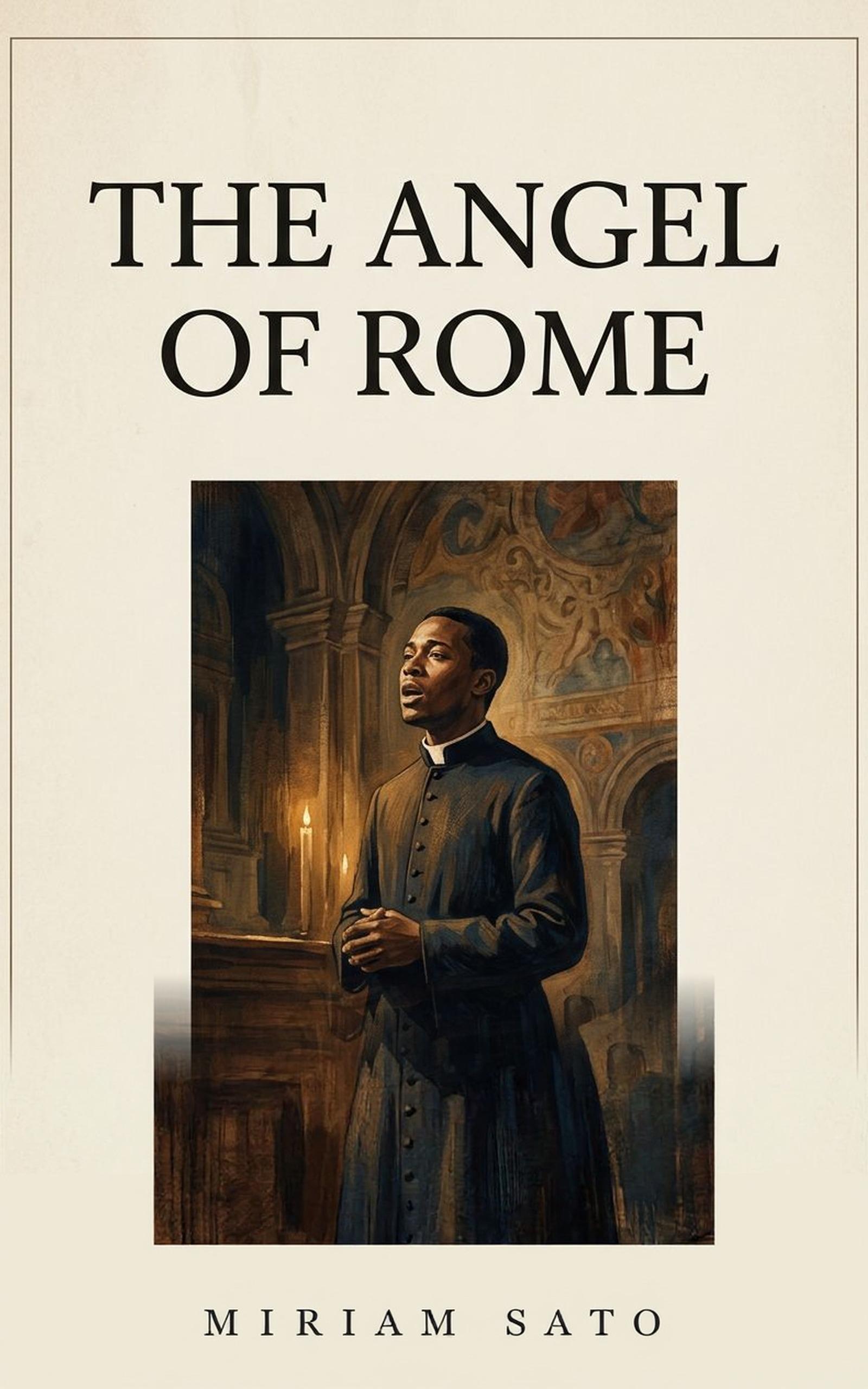
The Angel of Rome

Author
Miriam Sato
Share
About this book
Miriam Sato's novel traces the life of Alessandro Moreschi — the only castrato whose voice was ever recorded — from a hill town south of Rome to thirty years as First Soprano of the Sistine Chapel Choir, and finally to the spring afternoon in 1902 when English engineers pressed his sound into wax as a centuries-old tradition fell silent around him.
Rome, April 1902. In a rented room on the Via della Croce, two English engineers crank a wax cylinder to life and aim a brass horn at a small, beardless man of forty-three. He breathes, and the voice that arrives is one no living instrument has any business producing — fuller than a soprano, vibrating from the bones, the audible residue of a tradition that mutilated boys to make them sing like God.
Alessandro Moreschi was seven when a barber-surgeon was summoned to a stone house in Monte Compatri, and twelve when he was sent to Rome to learn what his altered body had been made for. For thirty years he served as First Soprano of the Sistine Chapel Choir, the last in a 350-year line, called by the newspapers l'Angelo di Roma — the Angel of Rome.
Miriam Sato follows Moreschi from the chestnut tree outside his mother's chapel to the candlelit ceiling of Michelangelo, from the steady friendship of the baritone Domenico Salvatori to a courtship with a young aristocrat that the Church's own rules forbid from completion.
At its center is the wax cylinder itself, and the question it forces: what is preserved when a sound outlives the body that produced it, and the cruelty that produced the body?
“Raw, unflinching, and deeply human. This is drama stripped to its bones and all the more powerful for it.”
— Kwame Asante, author of Sundiata★★★★☆