Literary FictionePub
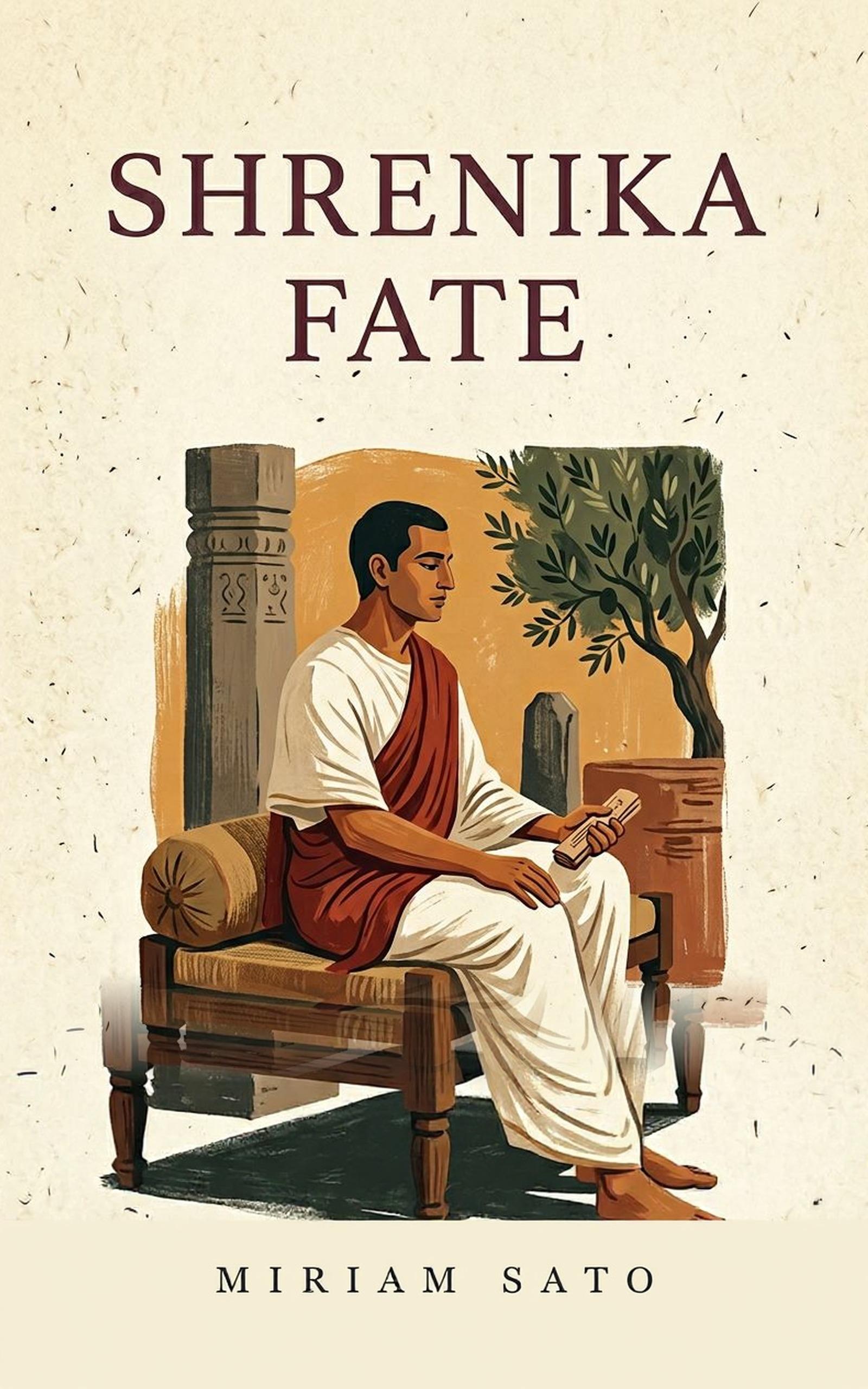
Shrenika's Fate
A King of Rajagriha Hears Mahavira

Author
Miriam Sato
Share
About this book
In fifth-century BCE Rajagriha, King Shrenika's conversion to the Jain principle of non-violence collides with a prophecy concerning his son Kunika and his own death. Miriam Sato follows the king, his queen Chellana, his minister, and the heir through the slow interior weather of a conviction carried to its end, and the household that must hold its shape around it.
At dusk in the court of Rajagriha, the lamps are still lit and the throne cloth still warm, but the king who sits there has begun, in private, to count the cost of every breath taken at another life's expense. Shrenika has heard Mahavira speak. The hearing has not left him.
What follows is not a soft turning. Conviction reorders the household — the queen Chellana, who has loved this man for decades; the minister Ananda, who has served him for thirty years; the son, Kunika, whose patience for his father's becoming has its own clock. Into this altered court arrives a knowledge Shrenika cannot unknow: the boy he raised will be the instrument of his death.
A monarch who has sworn ahimsa cannot lift a hand to prevent it. A father who loves his son cannot wish him different. Around him, the people who love him assemble their separate refusals — to accept, to intervene, to look away — while the succession gathers its own heat in rooms where the king is no longer welcome.
Miriam Sato writes the long, patient interior of a man holding a principle past the point at which comfort would have released him, and the lives that must arrange themselves around the shape of his yielding. A novel about the precise weight of a decision, and what it asks of those who have to keep living after it is made.
“Non-violence is easy to admire until it must be carried to its end; this novel tests the principle against prophecy, fatherhood, and death, and cheapens none of them.”
— Ayo Adeyemi, author of Grootslang★★★★★