HorrorePub
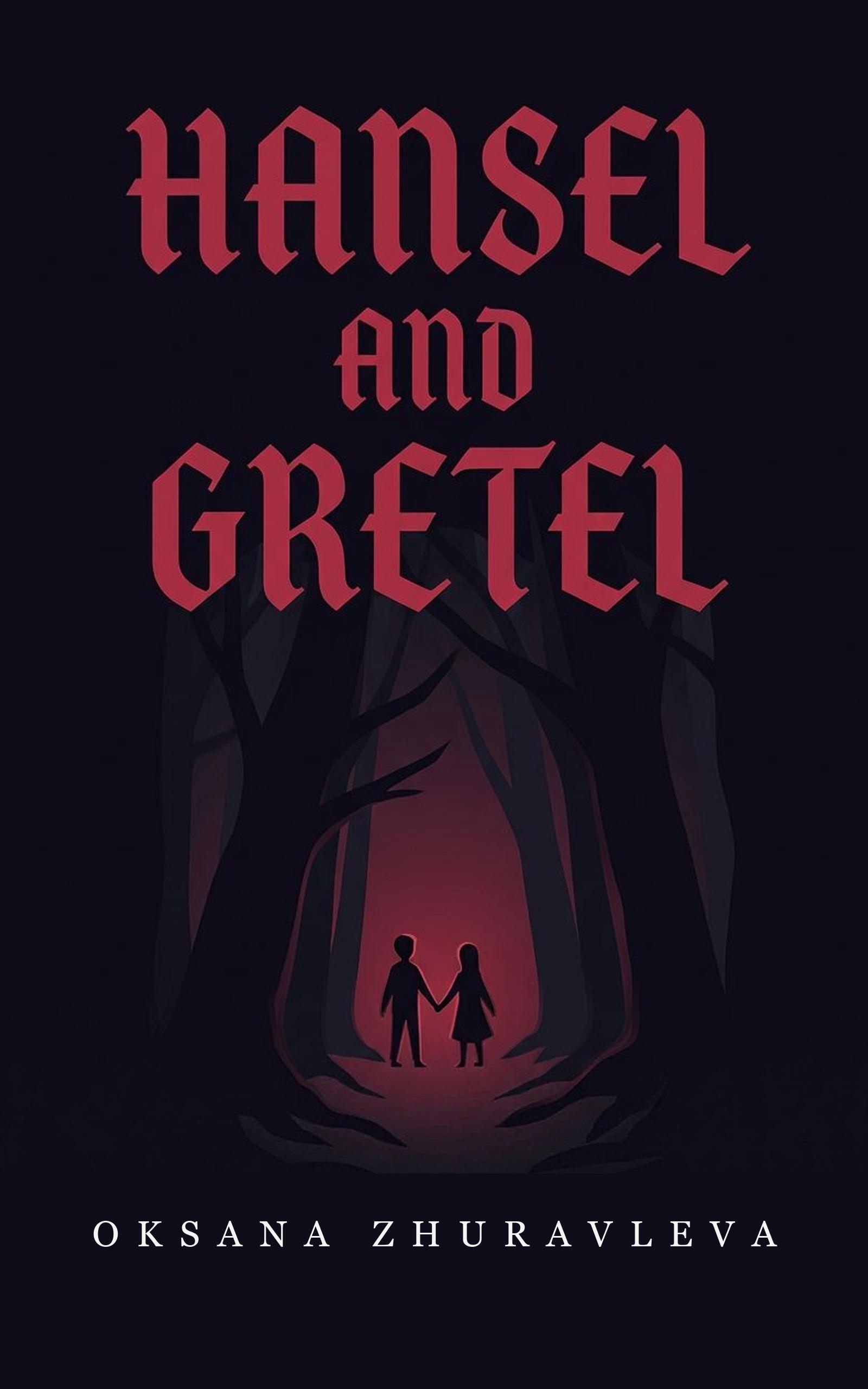
Hansel and Gretel

Author
Oksana Zhuravleva
Share
About this book
In the famine winter of 1617, two abandoned children follow the smell of fresh bread to a cottage deep in the Thuringian Forest, where an old woman waits with warmth, food, and a cage already built in the back room. Oksana Zhuravleva retells the Grimm tale as period horror — a study of hunger, calculation, and the architecture of a trap.
Thuringia, 1617. The grain jar is nearly empty, the village chimneys are mostly cold, and a stepmother has done the arithmetic: four mouths cannot survive the winter, but two might. When the woodcutter Albrecht is persuaded to lead his children deep into the Thüringer Wald and leave them there, ten-year-old Gretel is already awake in the loft, listening, counting, and gathering pebbles by moonlight.
Lost in a forest with no paths and no landmarks, Gretel and her younger brother Hansel walk until walking is no longer possible. On the third day, half-frozen and resigned, Gretel smells fresh bread on the air — impossibly, beautifully — and follows it to a cottage at the centre of a clearing. The old woman who opens the red door is nearly blind, gentle, and full of welcome. Her fingers linger a moment too long on Hansel's thin arm.
Oksana Zhuravleva reimagines the oldest of European stories as a period horror of famine, calculation, and architecture. The cottage is not a refuge stumbled upon but a structure built for a purpose. The cage in the back room is already finished. The oven is already warm.
A novel about the mathematics of survival — what a parent will weigh against a loaf of bread, what a child will learn in a single winter, and what a house can be designed to do.
“Horror that earns its scares through atmosphere and dread rather than cheap shock. Masterfully unsettling.”
— Isabella Rossi, author of La Maupin★★★★★