Historical FictionePub
Fordlandia

Author
Miriam Sato
Share
About this book
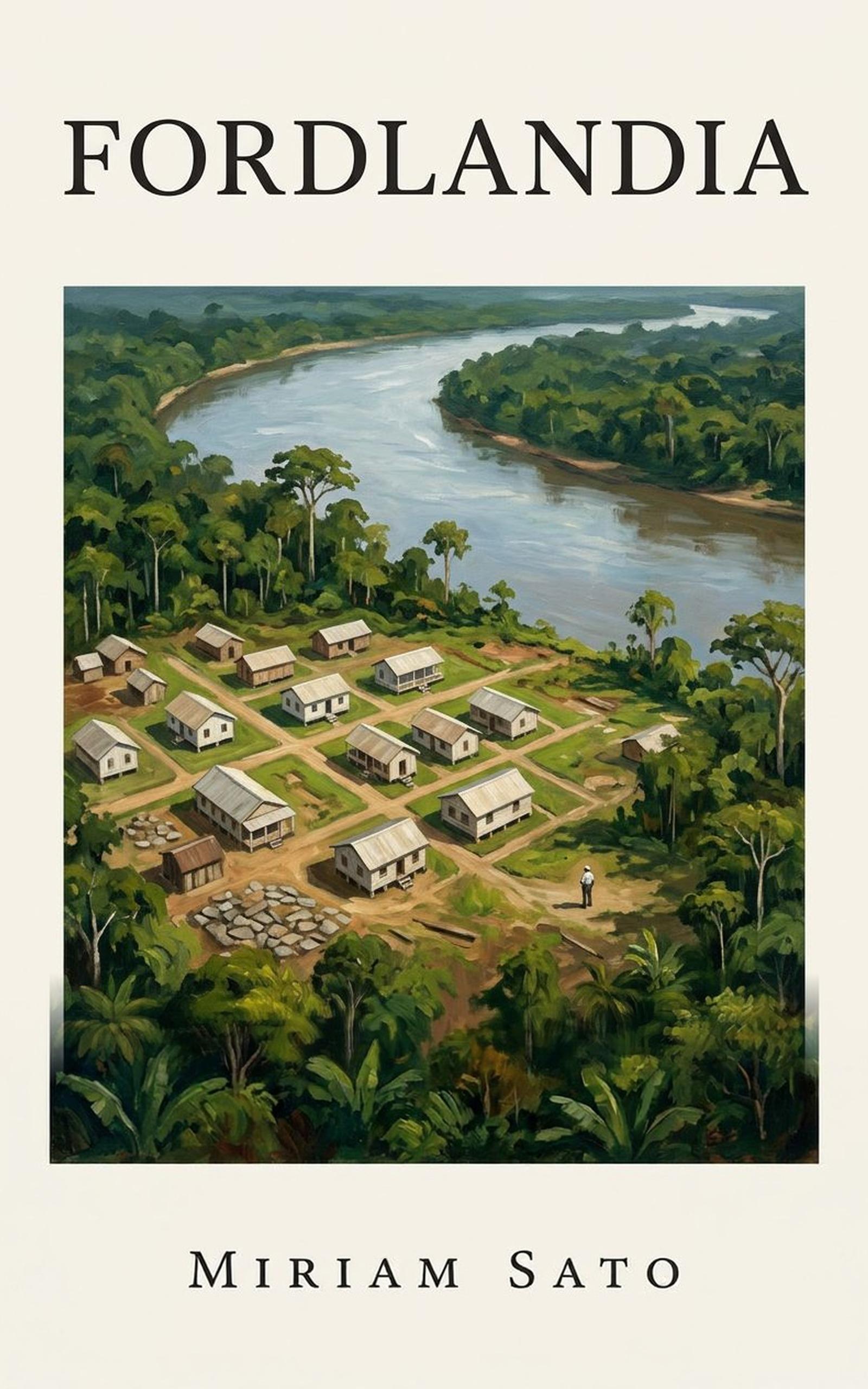
On the Tapajós River in 1928, a Michigan engineer is dispatched to clear ten thousand square kilometers of Amazon rainforest and raise, in its place, Henry Ford's vision of a model American town. Miriam Sato's novel traces the slow undoing of the project, the workers who lived inside it, and the man sent to make it work.
In 1928, the largest factory on earth runs like a heartbeat outside Henry Ford's office window, and on the wall hangs a map of Brazil with a rectangle drawn along the Tapajós River. Ten thousand square kilometers. Ford intends to plant rubber there, and to build, around the trees, an American town — paved streets, square dancing, oatmeal for breakfast, a golf course carved from primary forest.
The man he sends is Carl Lundgren, a Swedish-American engineer who believes, as Ford does, that efficiency is a moral virtue and the world rewards those who impose order upon it. Carl leaves behind a wife in Michigan and a garden whose tomatoes seem engineered. What he finds on the Tapajós is hilly, rocky ground, a vertical wall of green, and a foreman named Tomás Ferreira who studies the blueprints as if they were plans for a building on the moon.
The saplings are planted three meters apart, like corn in Iowa. The leaf blight arrives within months. So does the malaria, the saúba ants, the hunger of men told what they may eat. From Dearborn the orders keep coming: plant more trees, build a movie theater, enforce the dance.
Miriam Sato's novel follows a quiet, capable man as the country he came to organize begins, slowly, to organize him — until he can no longer tell building from destroying.
“Period detail that never overwhelms the human drama at its center. Historical fiction at its best.”
— Sofia Andersson, author of Briar Rose★★★★★