Literary FictionePub
Don Justo

Author
Liis Tamm
Share
About this book
Liis Tamm's portrait of Justo Gallego Martínez, the Spanish farmer who, after tuberculosis ended his Trappist vocation, spent six decades building a cathedral by hand from scrap concrete, oil drums, and discarded glass on a plot outside Madrid. A meditation on devotion, structure, and the thin border between holy fool and saint.
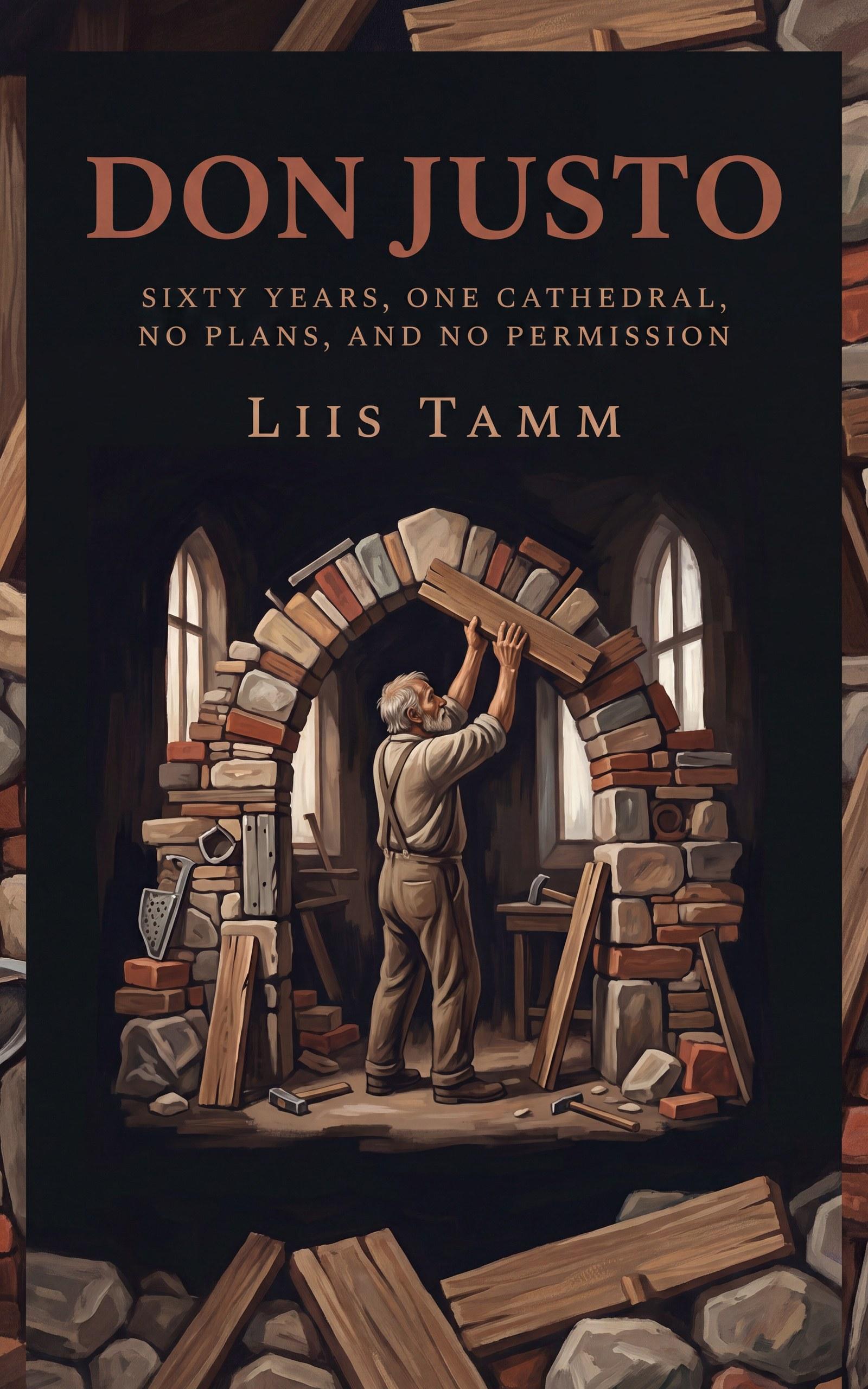
Dawn enters a structure that should not exist: oil-drum columns wrapped in concrete, a dome shaped from food tubs, windows of broken glass set in mortar. An old man on the scaffolding lays a brick. He has been laying bricks for sixty years.
In 1961, tuberculosis expels Justo Gallego from the Trappist monastery where he has spent nine years learning that a life requires architecture — that the canonical hours give shape to time, the cloister to space, the Rule to behavior. Sent home to convalesce in a working-class town outside Madrid, he recovers his lungs and loses his purpose. On the Feast of Our Lady of the Pillar, he walks into a clearing on his family's land, makes a vow to the Virgin, and buys a bag of cement.
What follows is the slow accumulation of an impossibility. Untrained, unfunded, working from no plans but the structures he remembers, Justo scavenges from construction sites and factory rejects. Neighbors call him mad. His sister María cooks his meals and watches the family land convert, parcel by parcel, into scrap metal and mortar.
Liis Tamm tells the story of a man built for devotion who, denied his container, builds his own — and in doing so raises the question that haunts every act of extreme faith: where does sanctity end and obsession begin, and is the distinction one we are equipped to make?
“One man, one plot of land, six decades of salvaged concrete: devotion measured not in miracles but in mixed mortar, and holiness left deliberately unfinished.”
— Chisato Funabashi, author of Sun Wukong★★★★☆