Folk HorrorePub
Daughter of the Fjord
A Bargain with the Water in Twelfth-Century Norway

Author
Petr Havlík
Share
About this book
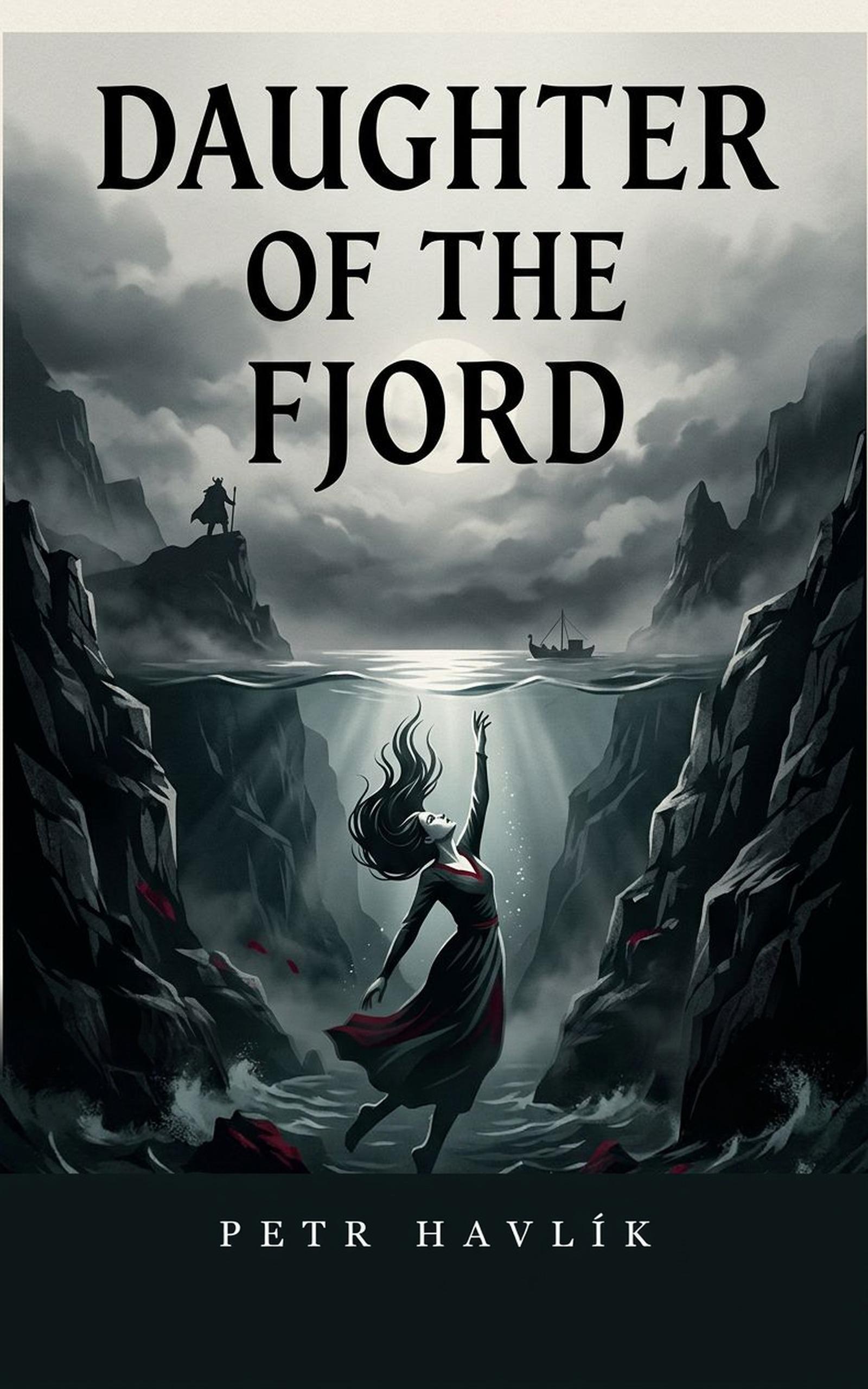
On the shore of a Norwegian fjord in the late twelfth century, a chieftain's daughter is drowned by her father for loving beneath her station — and the ancient water that receives her body does not let her rest. Petr Havlík's Nordic gothic debut reckons with grief, complicity, and the slow corrective intelligence of a landscape that has been listening for a very long time.
The fjord has always been listening. For a thousand years it has held the silt of the village's sins beneath its black skin, patient as granite, attentive as any elder. The fishermen carve runes into their hulls. The women leave bread at the standing stones. Storfjord knows what the water is owed.
In the long winter of the late twelfth century, Astrid Eriksdotter loves a fisherman named Magnus. The chieftain's daughter and a man who smells of tar and salt — a small defiance, in any other place. But her father, Erik Magnusson, is a man whose grief for his wife has hardened into the architecture of justice. He takes Astrid out in his boat. He returns alone. The village notes his solitude and accepts the story he offers about kin in the north, because the alternative is too costly to name.
The fjord does not accept the story. It claims Astrid for its own slow purposes, and what surfaces in the months that follow is no longer entirely a daughter, no longer entirely a woman — something older, colder, working from a mathematics that predates the village by ten thousand years.
Petr Havlík's novel is a folk horror of inheritance and silence: a study of what a landscape does with what a community throws away, and of the terrible patience of water that has learned to wait.
“There's something wrong with the village, and the novel takes its time letting you discover exactly what. Brilliant folk horror.”
— Greenlight Editorial★★★★★