Literary FictionePub
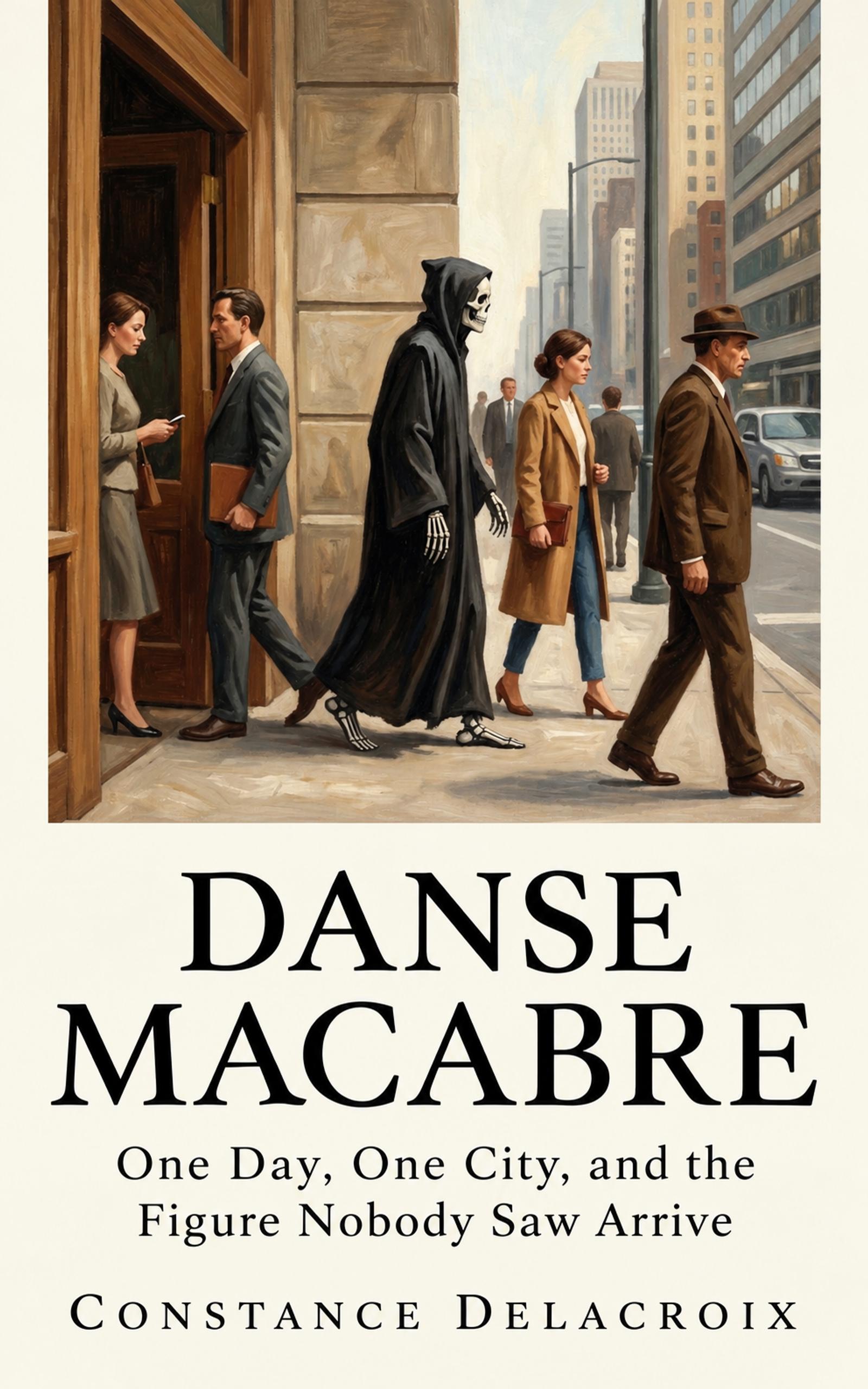
Danse Macabre
Author
Constance Delacroix
Share
About this book
Over the course of a single day, a figure called only Death moves through a modern city, attending without preference to a wife at her dying husband's bedside, a deliveryman, a young dancer, an arguing couple, a boy at a river, and an aged scholar of the medieval tradition. A formal, patient meditation on attention and presence.
At dawn, a figure in a dark coat enters the city. No one sees the figure arrive. By the end of the day, the figure will have stood at a bedside in a hospital ward, walked one block beside a deliveryman on his morning route, sat in a theatre foyer while a young dancer auditioned behind a closed door, refilled the water glasses of a couple finishing a long argument, watched a fourteen-year-old boy at the edge of a river, and read a medieval manuscript over the shoulder of the scholar who has spent her life with it.
The figure is known, in the oldest tradition, as Death. But this Death does not arrive to harvest. It arrives to attend. Its gaze carries no preference, no judgment, no need — only the unburdened clarity of something that simply sees, completely, and then moves on.
Constance Delacroix has written a slow, formal, deeply patient book — a city held still under one day's worth of impartial light. Margit will not leave her husband's bedside. Hana will look up from the manuscript and recognize what has entered the room. The dancer will dance. Each encounter asks the same question, refusing each time to answer it: what does it do to a person to be seen, fully, by something that wants nothing?
A modern danse macabre — equal in attention to the dying husband and the boy at the water, the practiced waiter and the worn-out wife — and a meditation on presence, on being looked at, and on the small dignities of an ordinary day.
“One day, one city, one unhurried visitor. The structure is simple as a bell, and each bedside vignette is placed with a stonemason's care.”
— Declan Foley, author of Curious Crew★★★★★