Literary FictionePub
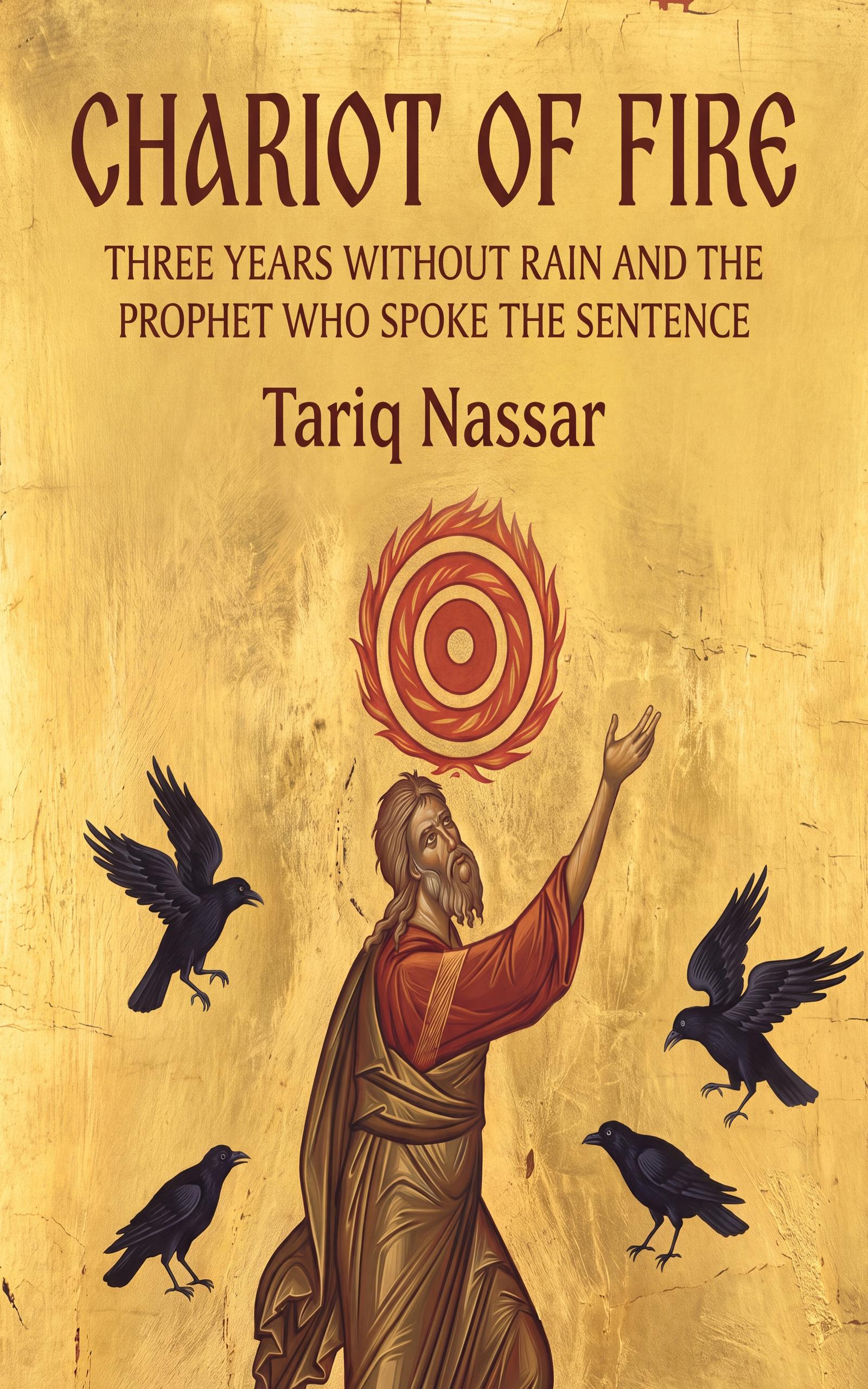
Chariot of Fire

Author
Tariq Nassar
Share
About this book
From Tariq Nassar, an epic retelling of the Elijah cycle: a sealed sky, a king and queen who have remade Israel in the image of Sidon, and a gaunt prophet sustained by ravens and by a Phoenician widow's failing jar of flour. Set against drought, purge, and the slow gathering toward Mount Carmel, the novel traces the cost of public prophecy and quiet, hidden faith.
Three years without rain. The brook runs dry, the cattle lie open-eyed in the fields, and the cracked earth reads like a script no one in Samaria wants to translate. Sustained by ravens and a thread of water that finally fails him, the prophet Elijah has spoken a sentence over a kingdom and now lives inside its consequences.
In Samaria, King Ahab keeps a throne room of Tyrian purple and ivory, and his Phoenician queen, Jezebel, conducts the methodical erasure of every prophet of Yahweh she can find. In the palace, the administrator Obadiah hides a hundred men in caves and walks the corridors with the composed face of a loyal servant. In Zarephath — Jezebel's own homeland — a starving widow gathers sticks for what she believes will be her last meal, and is asked instead to feed a stranger.
What follows is a quiet domestic miracle of flour and oil that does not run out, and a grief that does. Camel-hair against silk, a single voice against four hundred and fifty, a small jar against an empire — Tariq Nassar retells one of the Hebrew Bible's most elemental confrontations as a study of two faithfulnesses: the prophet who thunders in public, and the servant who keeps the bread coming in the dark.
When the contest finally comes to Mount Carmel, it asks not whose god is louder, but which god answers.
“Drought, ravens, a widow's failing jar of flour: the prophetic tradition rendered at human scale, where the fire on Carmel matters less than the hunger that precedes it.”
— Miriam Sato, author of Shrenika Fate★★★★★