Literary FictionePub
Blackflower

Author
Celine Park
Share
About this book
A neuroscientist studying anomalous structures in the human brain is drawn into the buried history of a Cold War programme that did not break minds but woke something inside them. Moving from a 1945 Paperclip debriefing to present-day Baltimore, Celine Park's novel is a patient, unsettling inquiry into consciousness, inheritance, and the architecture of the self.
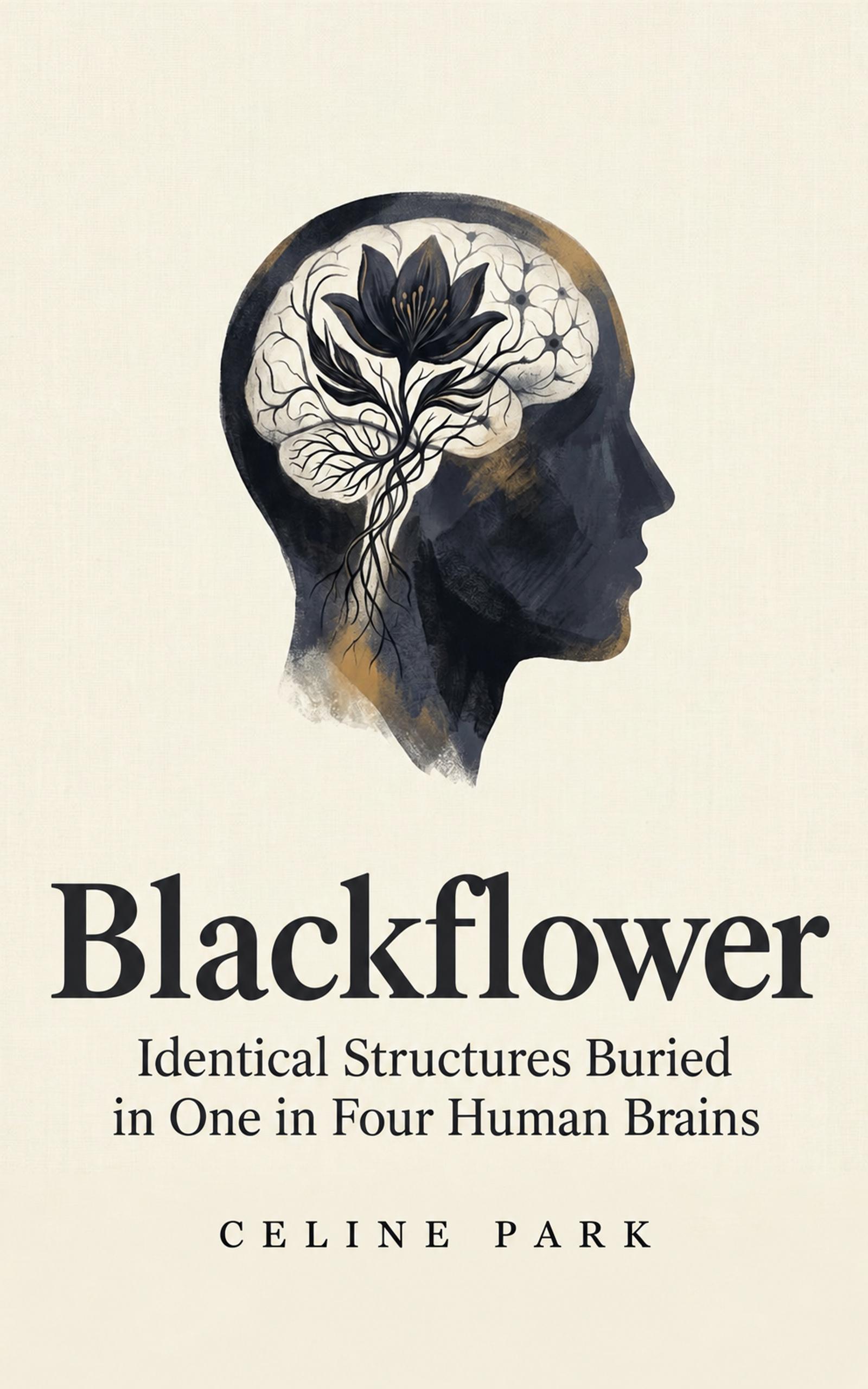
In a Baltimore neuroimaging lab, Dr. Mara Keane has spent five years documenting something her colleagues refuse to see: dense, identical structures buried in the corpus callosum of roughly one in four human brains. Her funding is renewed in the tone reserved for the politely indulged. Then a handwritten note appears on her keyboard, and a dying woman in a Towson hospice hands her a USB drive she was never meant to read.
The files describe a programme that began with seven scientists extracted through Operation Paperclip in 1945 and continued, beneath the public theatre of MK-ULTRA, for the better part of a century. The structures Mara identified are not vestigial. They are receivers. And in 1967, on grainy 16mm film, one of them answered.
What Mara inherits is not a theory but a weight: the knowledge that something has been resident in the architecture of human consciousness since before the first temple was built, that it has been listening, and that the threshold it has been waiting for is no longer distant.
Celine Park's novel moves between the green-lit interrogation rooms of post-war intelligence and the fluorescent quiet of contemporary research, asking what it means to be the carrier of a signal you did not consent to receive — and whether the self that answers is still, in any meaningful sense, your own.
“Raw, unflinching, and deeply human. This is drama stripped to its bones and all the more powerful for it.”
— Chisato Funabashi, author of The Snow Queen★★★★★