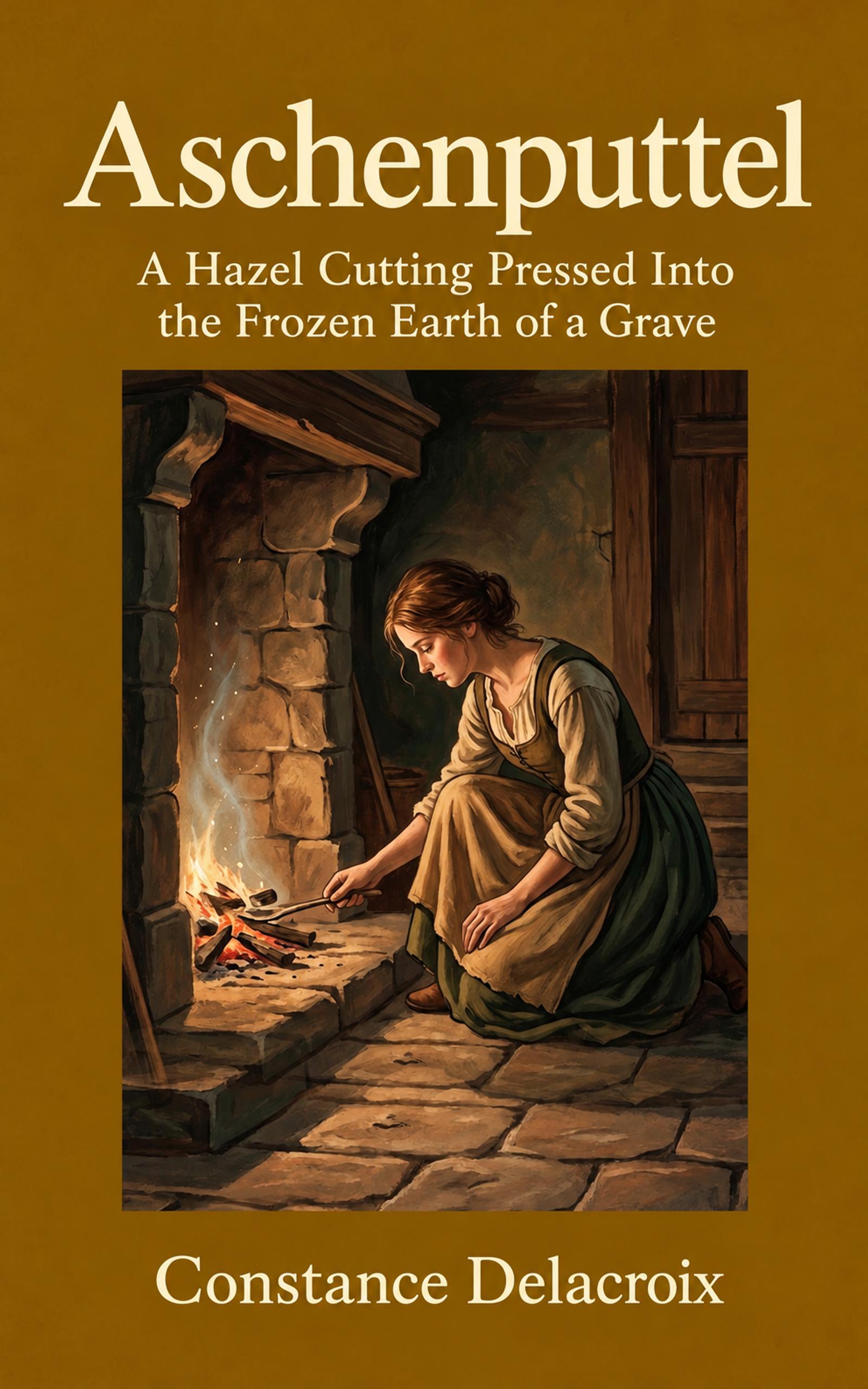
Aschenputtel

Author
Constance Delacroix
Share
About this book
A girl in a 16th-century German principality is reduced to kitchen servitude by her father's second wife and watches the hazel tree on her mother's grave grow into something that listens. When the prince summons every maiden in the land, the tree begins to answer. Constance Delacroix recovers the older, harder shape of a familiar story.
A hazel cutting, pressed into a dying woman's palm, then into the frozen earth of a winter grave. From this small green refusal, a tree begins to grow — and a daughter begins to wait.
In a German principality in the years of the Reformation, twelve-year-old Elsa watches her mother die and her father bring home another woman's family. Within a year she has been moved from her bedchamber to the kitchen ashes; within four she answers to Aschenputtel and serves the stepsisters who wear her mother's dresses. Each morning before the household wakes, she walks to the cemetery and speaks to the white bird that lives in the hazel tree. Each morning, the bird listens.
When the prince calls every eligible maiden to a three-day festival, the tree gives Elsa what her stepmother will not: a silver dress, a gold one, and the doves who sort lentils from ash with the precision of needles. But the doves who answer her grief are not gentle messengers. They have been listening for years, keeping a careful account.
What the tree gives, the tree will also collect. Constance Delacroix returns the oldest version of the story to its blood — a fairy tale in which mercy is finite, the dead remember, and the same beaks that sift the lentils are waiting for the wedding.
“A masterclass in restraint. The author trusts the reader to feel what the characters cannot say.”
— Kwame Asante, author of Sundiata★★★☆☆