EducationePub
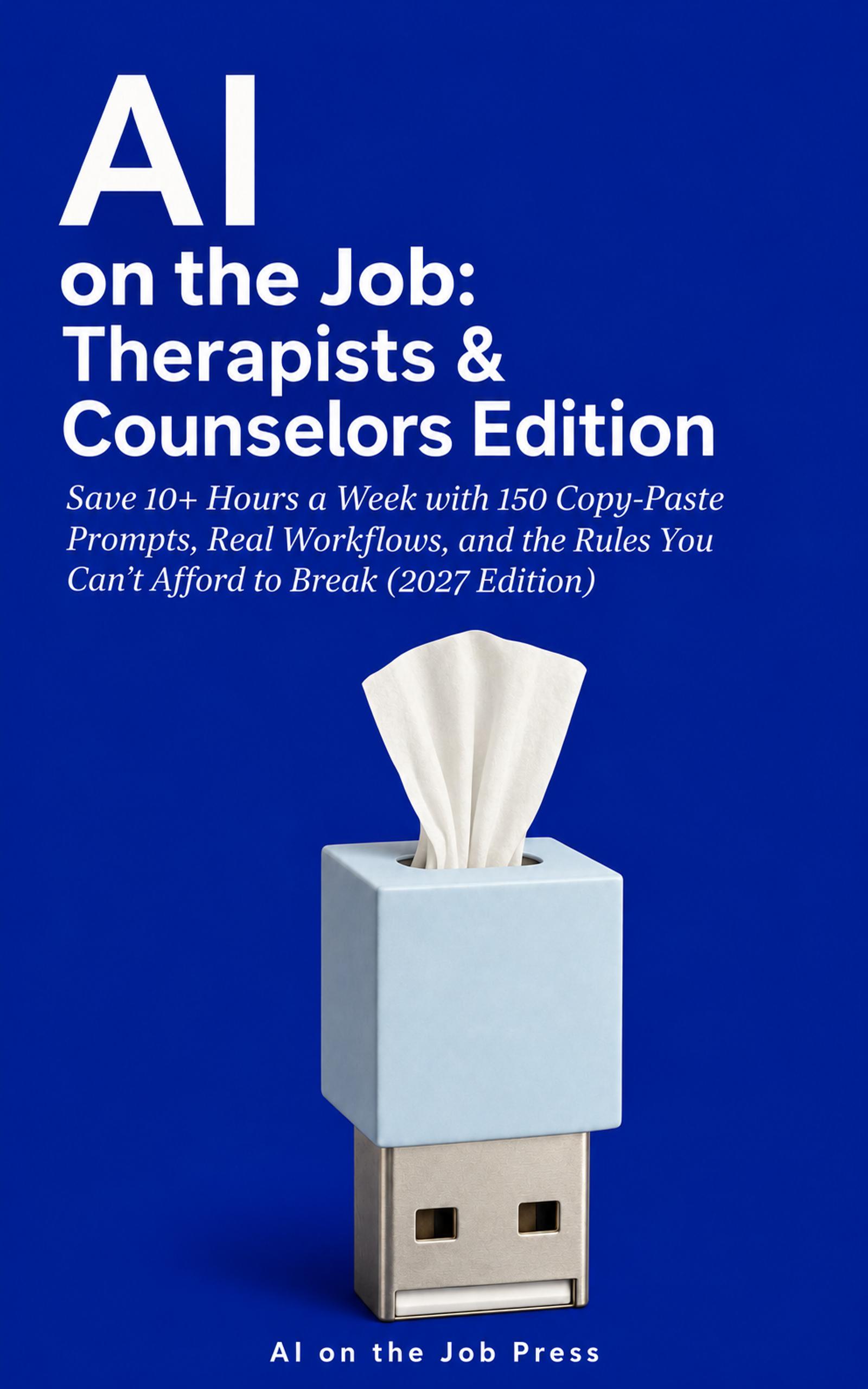
AI on the Job: Therapists & Counselors Edition
Save 10+ Hours a Week with 150 Copy-Paste Prompts, Real Workflows, and the Rules You Can’t Afford to Break (2027 Edition)
Ao
Author
AI on the Job Press
Share
About this book
A working manual for the business side of private practice: templates and paperwork, inquiry and boundary messages, superbill explainers and insurance appeals, referral letters, handouts and ethical marketing. Includes 150 numbered copy-paste prompts, and every workflow is built to run without a single client detail in it.
Six clients on a Thursday, and four of the notes are still open when you stop at half past seven. A denial from six weeks ago is under the mail. Monday's inquiry has gone three days without a reply. None of that is clinical work, none of it is billable, and nearly all of it happens after the last client leaves.
Book 23 in the AI on the Job series is a working manual for therapists and counselors in private practice, aiming an everyday AI chat tool—ChatGPT, Claude or Gemini—at the business side of practice. Twelve chapters cover note templates and treatment-plan language banks built once and used for years; intake packets and policy stacks that reach your attorney as drafts; the inquiry reply that converts without overpromising; fee, boundary and crisis-boilerplate messages; superbill explainers and the insurance appeal letter; balance conversations and the rate increase; referral letters and directory profiles; handouts, worksheets and group curricula; and marketing that fills a caseload without going near a testimonial. There are 150 numbered prompts, all repeated in a Prompt Library at the back.
The line is drawn before anything is offered: nothing a client has told you goes into a consumer chat window. Not the session, not the note, not the story with the name taken out, and not on a paid tier. Every workflow was built to run without a single client in it. The tools also invent, in the tone they use when right—a CPT code that is nearly correct, an appeal deadline in no plan document, the promised-outcome language your advertising rules forbid—so the facts stay yours and the sentences are its half, with a WATCH OUT box giving the one-minute check. RULES CORNER boxes cover confidentiality, your board and code, documentation integrity, testimonials and consent, gathered in Chapter 10; Chapter 11 covers the separate category of clinical documentation tools that work under signed agreements.
Words
31K
Chapters
12